
Milites Dei Security Services is a Educational institution establishment in White River, Mpumalanga, South Africa
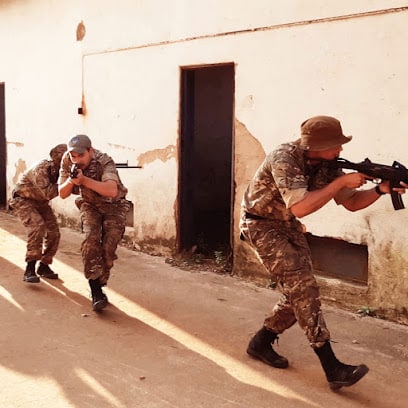
Milites Dei Academy delivers military training style educational programmes and accredited firearms qualifications from its base near White River in Mpumalanga, South Africa. Positioned within the category of educational institutions, the academy emphasises discipline, leadership, fitness and ethical values, presenting a pathway for individuals seeking rigorous skills in security, safety and related fields. The organisation highlights its head office location at Sanderson House in Peebles Valley, an area linked with the Jock of the Bushveld Conservancy, underscoring a setting that blends practical field training with a historically rich environment.
Core programmes cluster around military-style learning and accredited firearms qualifications. The offering slate is designed to equip learners with tangible capabilities that are recognisable to employers in security, law enforcement, private protection and related sectors. Notable courses include the Ultimate Course FA4, which covers a broad range of skills and firearms qualifications such as antipoaching, basic training, SWAT and tactical firearms. The academy also promotes a Three Months Specialist Operative track, described as a popular option for those seeking higher‑income employment opportunities after completion, alongside a Three Month Basics Training intended to shape individuals into capable security practitioners.
Specialist and tactical training is complemented by a Six Week Anti-Poaching programme aimed at conservation guardianship for wildlife protection. A dedicated SWAT Training pathway provides advanced, high-intensity instruction geared towards handling dangerous, high‑risk scenarios. The Tactical Training Courses catalogue expands to cover Rural Surveillance, Tracking, Reconnaissance, Vehicle Deployment, Riot Control, Tactical Medical, Close Quarter Combat, VIP Protection and related disciplines. Firearm instruction covers multiple weapon types and includes refresher courses, regulatory training for security personnel and, by arrangement, international client needs in certain cases.
Additional offerings broaden the academy’s portfolio to include dog training for industry and individuals, fitness instructor training, leadership camps for various age groups, team‑building programmes and courses in personal security for urban and rural contexts. There is also mention of international close protection on special request, indicating bespoke arrangements may be considered for select learners or organisations. The breadth of courses suggests an emphasis on practical skills that translate to employment opportunities within security services, private contracting, conservation, and related fields.
From a learner experience perspective, the academy promotes developing responsibility, leadership, fitness and ethical values, aiming to cultivate well‑rounded graduates who can contribute effectively in challenging environments. The structure of courses appears to integrate real‑world application with formal qualifications, and some participants are described as being recruited by employers before course completion, highlighting a potential link between training and job placement in the security sector.
Typical learning pathways and job types
- Military‑style training routes leading to specialist operative roles, firearms qualifications and private security opportunities.
- Conservation and anti‑poaching contexts for wildlife reserves and game lodges, combining field operations with protective duties.
- VIP and close protection scenarios, where applicable, alongside general security and risk management positions.
- Rural and urban security projects, including personal security details, event protection and transport security tasks.
Typical job types referenced by the programme descriptions include security operators, firearms specialists, anti‑poaching guardians, close protection officers (CPOs) and tactical security personnel. The academy suggests that some students may secure employment during or immediately after training, reflecting direct industry relevance and practical employability of its qualifications.
How requests and enrolment typically work
Details indicate a modular approach to training, with core tracks and option‑based add‑ons, including regulatory training and refresher courses. Enquiries appear to be handled through online information pages and course descriptions, with further information available about accreditation and course specifics. Training pathways acknowledge various entry points, including provision for those who do not have a matric, offering guidance on qualifying routes such as firearm competencies or anti-poaching training before advancing to more advanced courses.
Practical tips for prospective students
- Check accreditation and course compatibility with intended career paths, particularly the PFTC‑accredited qualifications cited in the materials.
- Consider your entry requirements and whether bridging courses are needed if matric is not completed.
- Assess the location and travel plans to White River, Mpumalanga, noting the Peebles Valley setting for on‑site training.
- Review the range of practical components, including field exercise elements like rural surveillance, tracking and protective duties, to ensure alignment with career goals.
- Investigate any bespoke options such as international close protection or dog training to determine fit and availability.
The academy’s visitor feedback highlights a perception of professional skills development and structured training experiences, with two user reviews noting positive impressions of the instructional quality over time. While specific course details, schedules or costs are not itemised in the readily available material, the overall portrayal is of a comprehensive, discipline‑focused educational offering in the security and firearms sector, framed by a location notable for its conservation heritage.
Operational hours and exact visitation times are not stated in the supplied content. Prospective students may wish to consult the official site for pathway details and upcoming intake periods, and to verify the current status of course availability and accreditation.
White River
Mpumalanga
South Africa
Sorry, no records were found. Please adjust your search criteria and try again.
Sorry, unable to load the Maps API.
Educational Institution Services in White River, Mpumalanga
Educational institutions in White River, Mpumalanga consistently provide a range of essential services designed to support learners across different stages of education. These services are typically organised to meet the needs of primary, secondary and post-school education, as well as additional learning support and community engagement. The approach emphasises accessibility, structured curricula, and responsive learning environments that reflect local requirements and the broader expectations of the South African education system.
Core services commonly offered include curriculum delivery across attendance-based programmes, exam preparation, and progression support. Institutions aim to align teaching with national and provincial frameworks while adapting content to local contexts. Learners can expect a timetable that outlines core subjects such as languages, mathematics, science and social studies, complemented by practical activities and project work. In many cases, schools and colleges also provide enrichment opportunities through clubs, sports, arts and cultural programmes designed to foster well-rounded development.
Student support services form a significant aspect of the educational offering. Counselling, study skills development, and assistance for learners with diverse educational needs are routinely available. Where necessary, schools may refer learners to external specialists for additional support, including speech and language services or occupational therapy, subject to local arrangements. Regular progress reviews help identify those requiring extra help, enabling proactive intervention and targeted remediation.
Administrative and operational services underpin the learning experience. This typically includes admissions processes, attendance tracking, examinations administration, and the management of records in line with statutory requirements. Safe and compliant environments are emphasised, with clear policies on safeguarding, behaviour, and discipline to maintain a conducive learning climate. Facilities management ensures classrooms, laboratories, libraries, and reception areas are suitable for their intended purpose, including appropriate heating, lighting and safe access.
Parents and guardians play a crucial role in the educational journey. Schools and higher education providers commonly provide channels for communication about academic progress, upcoming assessments, and school activities. Regular newsletters, parent-teacher meetings, and information boards support ongoing involvement. In the White River area, communities often value partnerships that enhance learning, such as local mentoring programmes or after-school care arrangements, designed to reinforce school-day learning and provide additional supervision and guidance.
Practical considerations for engaging with educational institutions in White River include transport arrangements, which can be a determining factor for attendance and punctuality. Many learners rely on a mix of school buses, public transport and parental drop-offs. The availability of safe, well-maintained facilities and secure campuses contributes to a positive perception of the learning environment, informing families’ choices when selecting a suitable institution. Accessibility for learners with mobility needs is another important consideration, with some campuses adapting layouts and resources to improve inclusivity.
Quality assurance in this context tends to be implied through the reputation of the institution within the community, consistency of assessment outcomes, and adherence to national education standards. While specific accreditations or awards are not guaranteed or universally described, attention is given to a track record of academic progression, responsible governance, and transparent reporting on performance indicators. Prospective students and guardians often review facility features such as libraries, study spaces, computer labs and practical laboratories to gauge the level of support available for independent and guided study.
In summary, educational institution services in White River, Mpumalanga focus on structured teaching across key subjects, learner support, administrative efficiency, and community engagement. The environment aims to be safe, inclusive and locally relevant, with practical considerations including transport, facilities, and parental involvement shaping the overall experience. For families seeking suitable arrangements, the emphasis remains on delivering reliable standard of education while accommodating the unique characteristics of the White River region.
- Structured curriculum delivery across primary, secondary and tertiary levels
- Student support services including counselling and remediation
- Administrative processes for admissions, attendance and examinations
- Safeguarding, facilities maintenance and safe campus operations
- Parental engagement and community partnerships