
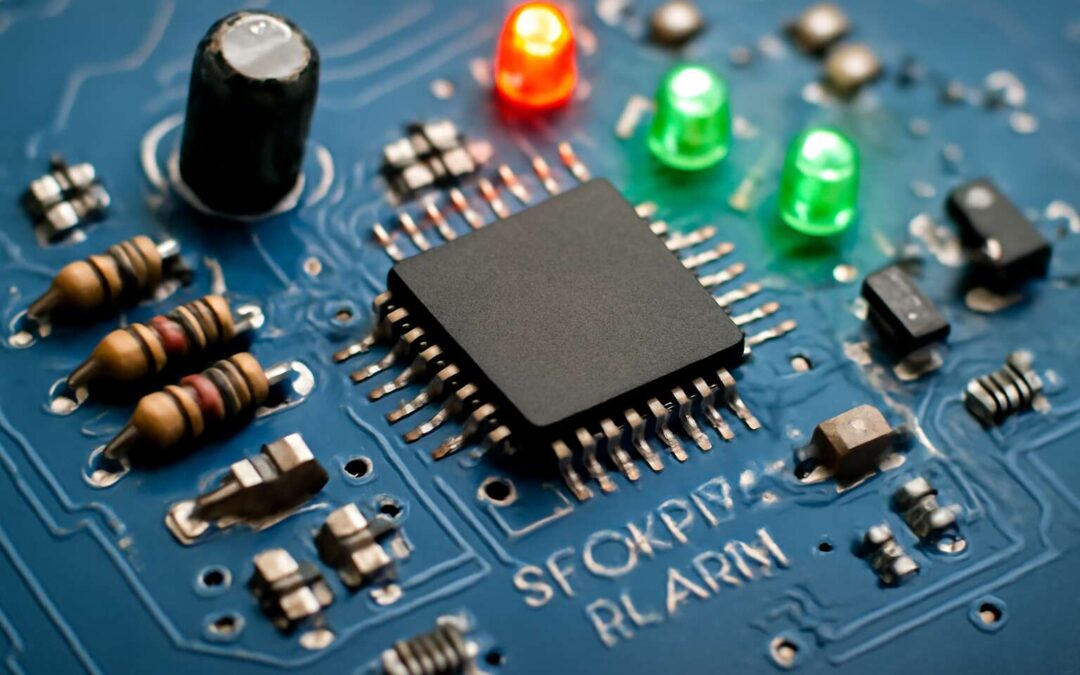
Fundamentals of alarm circuit design for property protection
Purpose and basic operation of an alarm circuit
In the theatre of property protection, a security alarm circuit is a well-mannered sentinel—present, purposeful, and silent until duty calls. I’ve learned that a good circuit guards the night without fuss.
Fundamentals lean on sensing, processing, and signaling. Key components live in balance: sensors (doors, windows, motion), a central controller, power with backup, and a trustworthy communications path. For South Africa’s varied power and network realities, resilience and tamper resistance are as important as sensitivity.
- Sensors: door/window contacts, PIR detectors
- Controller: logic that interprets events
- Power: mains with battery or solar back‑up
- Communication: wired or wireless link to monitoring
Together, these design fundamentals shape a security alarm circuit that pairs reliability with quiet elegance, protecting property without theatrics and inviting confident stewardship of space.
Electrical principles essential for reliability
In South Africa’s landscape of power quirks and network jitters, resilience isn’t a feature—it’s a prerequisite. The fundamentals of protection hinge on solid electrical reasoning, keeping a property safe without fanfare. This security alarm circuit forms the quiet backbone, marrying sensing, processing, and signaling with endurance against outages and EMI.
Key electrical principles essential for reliability include the following:
- Redundant power paths and clean isolation
- Tamper-resilient enclosures and secure wiring
- Proper grounding and EMI/transient management
- Battery health and charging discipline (solar or mains)
Beyond these, careful layout reduces false alarms and preserves battery life, weaving resilience into daily life without turning sophistication into noise. The result is a balanced, stealthy stance that protects spaces and invites confident stewardship.
Powering options and backup strategies
Outages in SA can stretch into hours; your security alarm circuit must outsmart the blackout. South Africa’s grid quirks have made resilience a precondition, not a flourish. Powering options range from mains with clean backups to solar-fed stamina that keeps the system online when the lights go out.
- AC mains with a smart battery-backed UPS
- Solar panels with a battery bank and intelligent charge controller
- Hybrid layouts that switch to a generator for prolonged outages
For a security alarm circuit, battery health and charging discipline are not optional; they are the heartbeat that keeps sensors alert and false alarms at bay. Regular checks and proper isolation of power rails preserve reliability without turning maintenance into a drama.
Topology options for wired, wireless, and monitored configurations
Across South Africa, outages can stretch into hours, turning the night into a test of resilience. A well-tuned security alarm circuit keeps the guardians awake—detecting intrusions swiftly and cutting down on false alarms when the grid sighs to a halt.
Fundamentals of alarm circuit design for property protection hinge on dependable topology, signal integrity, and trustworthy tamper detection. The goal is a steady, noise-free heartbeat that keeps doors and windows speaking clearly.
- Wired topology: hard lines from sensors to a central panel for low latency and minimal interference
- Wireless topology: battery-powered sensors forming a resilient mesh, ideal for retrofits and irregular layouts
- Monitored configuration: direct link to a central monitoring station for rapid human response
Viewed as part of a larger security narrative, topology choices adapt to building shape, risk profile, and budget. The right mix makes the circuit a quiet sentinel as shadows lengthen and the city hums below.
Core components and wiring for a reliable alarm system circuit
Overview of core devices: microcontrollers, relays, and interfaces
Few things crack a quiet night like a well-tuned security alarm circuit. In South Africa, a reliable system can cut property loss during a break-in by a striking margin. At its core, a smart microcontroller, sturdy relays, and clean interfaces orchestrate all sensors and controllers. The result is a calm, almost supernatural, decision-maker that separates threat from noise!
- Microcontroller acts as the brain coordinating sensor inputs
- Relays switch sirens and power while isolating logic
- Interfaces link door sensors, motion detectors, keypads, and wireless modules
- Power management ensures uptime with clean backups
Wiring discipline matters: shielded signal runs, solid grounds, and tidy routing. A reliable setup thrives when data and power stay separated, ensuring crisp alarms and minimal false triggers.
Sensor integration for doors, windows, and motion
In a night that won’t sleep, a well-tuned security alarm circuit acts as a quiet sentinel. Across South Africa, a reliable setup can cut property loss by meaningful margins when a break-in is detected before it escalates. The trick lies in disciplined design that balances speed, sensitivity, and resilience.
The core trio—microcontroller brain, rugged relays, and clean interfaces—coordinates sensor inputs without drama. Sensor integration for doors, windows, and motion is mapped to distinct channels, preserving quick decisions, minimizing chatter, and keeping power budgets honest. This security alarm circuit thrives on crisp signal paths and deliberate separation of logic from power.
Wiring discipline matters: shielded signal runs, solid grounds, and tidy routing. A reliable setup thrives when data and power stay separated, ensuring crisp alarms and minimal false triggers.
- Door and window sensors with magnetic contacts tuned for low leakage
- PIR motion detectors positioned to cover intended zones while avoiding false triggers
- Wireless modules and gateways for remote monitoring and alerts
Actuators and audible/visible indicators
Actuators are the heartbeat of a security alarm circuit, turning warning into action. When a breach is detected, a siren roars and a strobe slices the night, drawing attention and discouraging intruders. The cadence must be calibrated—loud enough to deter, yet restrained to avoid false alarms. In a South African home, a compact, reliable setup depends on robust paths that carry commands from the control core to the devices without hiss or lag.
- Piezo buzzer or siren for audible alert
- Strobe light or LED indicator for visual cue
- Door lock actuator or magnetic strike for controlled entry (where applicable)
- Relay modules or solid-state switches for reliable drive
Wiring discipline matters most: keep power for actuators separate from sensing circuits, route signal and power on clean, shielded paths, ensure solid grounds, and document a tidy harness. In a security alarm circuit, crisp, deliberate connections translate into moments of certainty when the night trembles with a warning.
Power management, regulation, and battery backup
Power reliability is the quiet architect of a vigilant home. In a South African household, the security alarm circuit must breathe without hesitation; a flicker or sag can mute the chorus of warnings and invite the night to linger. I hear the electrical hush and the promise of response.
To steward that reliability, frame the design around clean power management and robust battery backup. The essentials include a dedicated power rail for actuators and sensing, smart regulation (linear or switching), and a charging path that monitors health and temperature.
- Dedicated power rail for actuators and sensing
- Regulation via low-dropout or switching regulators
- Battery charging path with health monitoring
- Fusing, isolation, and solid grounding
Wiring discipline follows suit—route power and sensing on separate, shielded paths, keep grounds solid, and document the harness. When the night trembles, the system stands upright!
Protection and safety devices: fuses and isolation
Even as the night tightens its grip, a security alarm circuit must breathe without hesitation. Core components and wiring hinge on clean power separation from sensing, robust protection devices, and rigorous grounding. Fuses and isolation barriers guard the loop from surges; properly rated conductors keep current calm and predictable. The aim is a reliable sentinel—no nuisance trips, no shy signals, just consistent alerts that wake the house and, if needed, the neighborhood.
- Fuses and circuit breakers as the first line of defense
- Galvanic isolation between power and sensing domains
- Protective earth bonding for metal enclosures
- Shielded, color-coded cabling to minimize interference
A tidy harness and clear documentation seal the deal, preserving the South African home’s peace and readiness.
DIY assembly and wiring guides for a do-it-yourself alarm circuit
Creating clear wiring diagrams and layout planning
<p Across South Africa, a well-crafted security alarm circuit changes from a fantasy to a shield you can trust. A recent look at DIY projects shows that roughly 40% falter at the wiring stage, turning potential security into a tangle of false alarms. The wiring diagram acts as a compass, keeping routes clear and feeds properly prioritized. I sketch with bold color codes and label every feed so a midnight test doesn’t devolve into a scavenger hunt.
- Draft a schematic that mirrors your space, using color-coded wires for power, data, and triggers for the security alarm circuit.
- Plan the physical layout on a board or enclosure, labeling every connector and route to aid maintenance.
- Review the diagram for interference, thermal considerations, and future expandability, keeping simplicity in mind.
Layout planning keeps the system reliable under SA conditions, prioritizing readability over clever wiring. A tidy harness and clearly labeled connectors cut maintenance time and avoid misreads, while the drawing includes a legend and enclosure footprint for future tweaks.
Choosing wire gauge, cable routing, and labeling
In South Africa, a well-wired home is the difference between a hush of security and a chorus of false alarms. I’ve learned that the charm of a DIY project lies in restraint—clean, thoughtful wiring that holds up under pressure in a security alarm circuit.
Choose wire gauge with future-proofing in mind, plan routes to minimize interference. For routing, separate power and data lines, avoid sharp bends, and secure runs. Label every conductor and connector so a future maintainer smiles rather than swears.
- Gauge and current: choose robust, flexible conductors.
- Routing: keep power and data separate and secure.
- Labeling: color-code and tag connectors for quick reference.
A tidy backbone reduces troubleshooting time and preserves calm.
With care, this DIY approach yields a system that stays calm at the switch and respects local codes, making maintenance less theatre and more poetry.
Schematic basics including NC/NO contacts and pull-ups
“Measure twice, cut once.” This South African home knows a security alarm circuit is more art than accident, more restraint than rush. A clean schematic invites calm and resilience in the face of the unexpected.
Within schematic basics, NC/NO contacts and pull-ups frame how signals travel. The diagram shows how a normally closed path behaves when a switch opens, and how a normally open contact closes to trigger an alert.
Beyond symbols, the DIY ethos shines in how the diagram communicates future expansion while remaining readable for a maintainer. Thoughtful notation and clean connections keep the circuit robust under pressure and change.
Prototyping, breadboarding, and testing before installation
Power lines murmur at dusk across South Africa, and in that hum a craftsman’s creed dawns: a patient build is a stronger shield. “The best shield is the one you test,” a mentor said, and the bench becomes a cathedral of calm before deployment. I trust that bench to hold risk. A sketch becomes confidence, a quiet promise to protect a home.
DIY assembly begins on a breadboard where ideas braid into circuits. Prototyping lets sensors, microcontrollers, and relays meet and mend in safe space—well before brick-and-mortar installation. Conduct dry runs, observe LED indicators, and map signals with patient hand and watchful eye.
With keepsakes of color-coded wires and clean layout, a security alarm circuit gains resilience. Plan harnesses so future expansion can slip into the frame without crowning chaos. Documentation, testing, and humane respect for power geography guard the project from the first spark to the last quiet chime.
Common mistakes to avoid during DIY builds
In the quiet shadow of the workshop, a startling statistic hums through the air: South Africa sees home break-ins every 25 seconds. A security alarm circuit takes shape as a patient ritual, where color-coded wires map a quiet oath to protect. This is no sprint to the finish; it is a discipline of tidy paths, labeled junctions, and careful separation of power and signal that keeps the night at bay.
- Route power and data separately, with strain relief near enclosures
- Label every connection and keep routes clean to ease future maintenance
- Avoid dense splices; use modular connectors and solid terminals to resist heat and vibration
Thus, the DIY assembly of a security alarm circuit becomes a quiet covenant: resilient, readable, and ready to guard a home against the encroaching dark.
Testing, safety, and compliance for home alarm circuits
Functional testing, fault finding, and validation procedures
Testing a security alarm circuit demands both precision and reverence! Functional testing, fault finding, and validation establish that doors, windows, and motion sensors trigger reliably and that nuisance alarms are minimized. In SA, safety and compliance are not afterthoughts but design imperatives, especially when power stability or load-shedding tests the system’s backbone.
Before you celebrate a successful lamp test, consider these high-level verification pillars:
- Functional accuracy across zones and interfaces
- Electrical safety and proper isolation
- Documentation, labeling, and traceability for audits
These pillars help maintain confidence when the home is empty and life is busy.
Final checks confirm alignment with local codes and manufacturer guidelines, and maintenance routines ensure long-term reliability. With disciplined testing, the system remains compliant, resilient, and ready to act when required.
Safety precautions during installation and operation
Across South Africa’s evolving neighborhoods, a well-tuned security alarm circuit is a quiet guardian. Testing, safety, and compliance aren’t afterthoughts but three pillars that keep doors, windows, and motion sensors honest when night falls and the grid stutters. Precision tempered by reverence yields a system that listens twice before it acts.
Safety precautions during installation and operation grow from respect for life and property. Key principles to uphold include:
- Power isolation and clear labeling before any inspection
- Reliance on certified components and avoidance of bypasses
- Supervised testing in controlled conditions
- Documentation of changes for audits
Final checks align with local codes and manufacturer guidelines, and routine maintenance preserves long-term reliability. In this way, the circuit stands as a steadfast sentinel, ready to act when required.
Regulatory standards, certifications, and compliance considerations
Across South Africa, a properly certified security alarm circuit acts as a quiet guardian. Insurance data show compliant installations can reduce premiums by up to 15%, a tangible incentive for serious testing and documentation!
Testing, safety, and compliance aren’t afterthoughts but three pillars that keep homes secure and insurers satisfied. Consider regulatory standards and certifications that guide every installation:
- SABS certification and alignment with SANS 10142 and related electrical standards.
- Security-system certifications and cross-industry audits for installers.
- Comprehensive documentation: test results, change logs, and maintenance records.
Supervised testing in controlled conditions ensures sensors respond as expected, while a traceable audit trail supports future inspections and insurance reviews.
In South Africa, adherence to local codes and manufacturer guidelines remains essential for long-term integrity, guiding maintenance schedules, documentation updates, and regular audits that prove compliance to authorities and insurers.
Ongoing maintenance, monitoring, and reliability checks
In South Africa, a well-credentialed security alarm circuit stands as a quiet guardian behind the walls. Testing, safety, and compliance aren’t afterthoughts; they’re the backbone of reliability that keeps families steady and insurers confident. A traceable record of performance becomes the language inspectors and auditors read with ease.
Supervised testing under controlled conditions ensures sensors respond as expected, and a robust audit trail supports future inspections and insurance reviews. I sleep easier knowing those records exist, neatly filed and ready for review.
- Traceable test results and change logs
- Comprehensive maintenance records and inspection certificates
- Independent audits by certified installers
In South Africa, local codes and manufacturer guidelines guide ongoing care, shaping maintenance records and documentation updates for regulators and insurers alike.
Integrating sensors cameras and smart hubs with alarm circuits
Wireless sensor integration strategies and interoperability
State-of-the-art security starts with a spine you can trust. When sensors, cameras, and smart hubs talk a single language, response times plummet and coverage widens. A robust security alarm circuit ties it all together, making alerts travel instantly and decisions feel almost prescient.
To persuade the system to cooperate across brands, rely on interoperability strategies that emphasize open standards and secure channels. The following approaches keep your installation nimble and future-proof:
- Unified hubs and dashboards for a single view
- Edge processing for local decisions with encrypted cloud backups
- Standardized device profiles to reduce configuration drift
In South Africa, this flexibility matters as networks contend with load shedding and variable connectivity. A well-integrated setup delivers reliable notifications, scalable growth, and peace of mind—without locking you into a single vendor.
Smart home platform compatibility, routines, and automations
Integrating sensors, cameras, and smart hubs with a security alarm circuit creates a single, authoritative spine for your space. When devices speak the same protocol, alerts sprint to every screen and response times sharpen to a heartbeat. Open standards let you mix motion sensors, door contacts, and cameras without dead zones, so tamper signals don’t slip through the cracks. In a world where seconds matter, unified architecture keeps signals coherent and decisions precise.
Smart home platform compatibility, routines, and automations turn raw data into decisive action.
- Unified dashboards for a single view
- Edge processing with encrypted cloud backups
- Standardized device profiles to reduce configuration drift
This approach makes the security alarm circuit resilient and intuitive, letting scenes like ‘arm at night’ cascade to cameras, locks, and sirens in perfect harmony—ideal for South Africa’s variable connectivity.
Network security and access control for alarm ecosystems
Night falls, and in the corridors a quiet alarm ticks like a heartbeat. In South Africa’s cities, a well-integrated security spine can shave precious seconds off every alert, turning dread into decisive action. A system that marries sensors, cameras, and smart hubs becomes a single, vigilant presence in your space.
Integrating sensors, cameras, and smart hubs with the security alarm circuit translates raw signals into ordered response. When a door shifts or a shadow moves, alerts bloom across devices, locking doors and dampening chaos with precision. For robust network security and access control, prioritize encrypted channels, identity-based authentication, and role-based permissions so tamper signals never slip through.
- Encrypted device-to-cloud transport
- Identity-based authentication for users and guests
- Auditable access logs and tamper alerts
Amid South Africa’s variegated connectivity, this unified approach keeps every component in concert—security alarm circuit and its symphony of sensors speaking with one voice.
Local vs cloud monitoring options and data privacy
South Africa’s cities pulse with urgency, and a single, coordinated voice can make all the difference. The security alarm circuit binds sensors, cameras, and smart hubs into one vigilant presence. When a door shifts or a shadow moves, alerts bloom across devices, guiding doors to lock and chaos to subside. “The best alarm speaks with one voice,” a seasoned integrator likes to say.
Local vs cloud monitoring and data privacy shape how the system breathes in daily life. Local keeps control on-site; cloud offers scalable visibility across sites. Data privacy hinges on encryption, auditable logs, and SA-residency preferences.
- Local monitoring: immediate response, autonomy, and continued operation even when networks dip
- Cloud monitoring: scalable oversight, remote access, and easier updates
- Data privacy: encryption, auditable logs, and data residency aligned to South Africa
Redundancy, failover planning, and remote diagnostics
Across South Africa, a single sensor cannot carry the weight of vigilance. An integrated security alarm circuit binds sensors, cameras, and smart hubs into one watchful chorus. Redundancy, failover planning, and remote diagnostics keep the rhythm steady when networks stutter. “The best alarm speaks with one voice,” an experienced integrator likes to say, and that voice must endure weather, power dips, and busy dashboards.
- Redundant power paths and battery backups
- Automatic failover to cellular or alternate networks
- Remote diagnostics for real-time health checks
With this architecture, South African homes and offices gain quiet certainty—the backbone of calm in chaos.
