
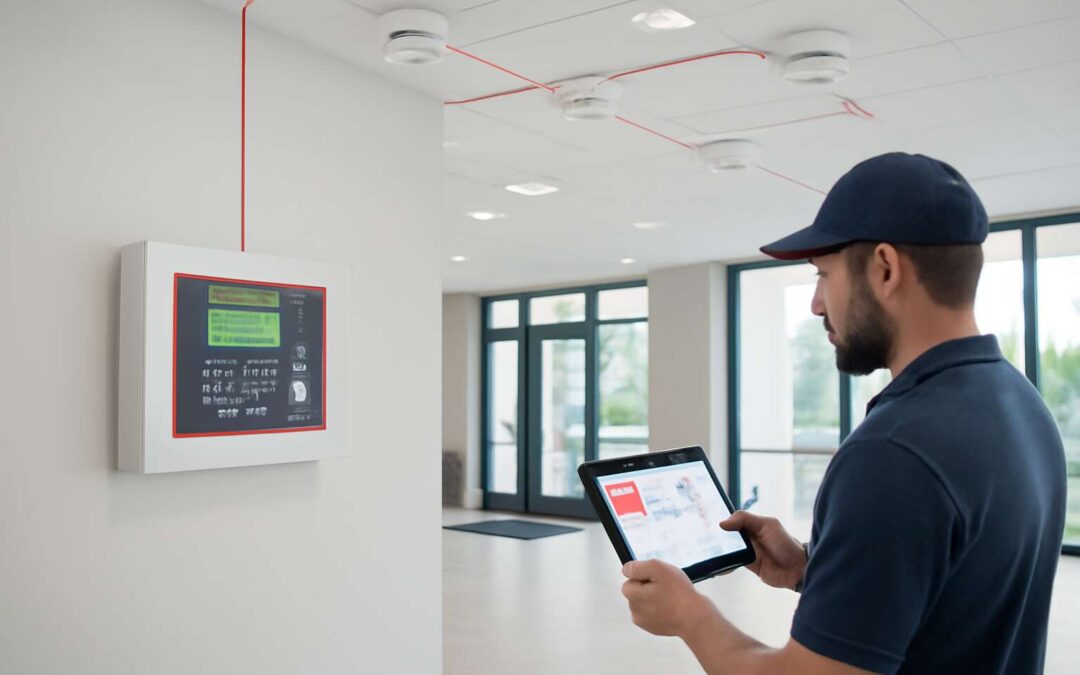
Understanding Commercial Wireless Fire Alarm Systems
Benefits of Wireless Fire Alarm Systems in Commercial Buildings
In a city where every minute matters, a wireless fire alarm system commercial acts like a guardian angel—giving swift alerts while doors stay open for people and ideas. Across South Africa, building teams are choosing reliability over rigidity, seeking systems that adapt as spaces evolve. Understanding how these networks communicate—short-range radios, resilient mesh topologies, and battery-backed panels—helps designers craft safer, more flexible environments.
Benefits unfold in practice: faster installation, less downtime, scalable coverage, and simpler retrofits in historic or multi-tenant buildings. The result is continuous protection with minimal disruption to daily operations.
- Rapid deployment and easier maintenance
- Flexible layouts for evolving spaces
- Central monitoring with robust fault tolerance
Key Components of a Commercial Wireless Fire Alarm System
Seconds count in South Africa’s fast-paced business spaces, and a well-tuned wireless fire alarm system commercial can turn a moment of danger into a moment of safety. Understanding the system’s key components begins with how they talk to one another—safeguarding tenants, staff, and routines as spaces evolve. From sensors to panels to battery backups, every piece fits into a cohesive safety web.
- Detection devices: smoke, heat, and multi-sensor units tuned for varied spaces
- Wireless mesh network and transmission protocols that keep signals flowing
- Battery-backed control panels and smart power management for downtime resilience
- Central monitoring software with clear alert workflows and fault reporting
- Audible and visual indicators integrated with site management systems
In practice, the network’s resilience means fewer interruptions and more reliable alerts for South African buildings—historic venues, multi-tenant offices, and bustling retail spaces alike.
Regulatory Compliance and Standards for Wireless Fire Alarm Solutions
Across South Africa’s fast-paced commercial spaces, regulatory compliance is the quiet guarantor of safety. The wireless fire alarm system commercial must align with local standards while delivering rapid, reliable alerts, even in retrofit projects. When tenants rely on calm in the chaos, verifiable audits, test schedules, and traceable documentation keep fear at bay!
- SANS 10139 design and performance criteria
- EN 54 family modules for detectors and panels
- Commissioning, testing, and ongoing maintenance cadences
Beyond letters, compliant operation yields clear fault reporting and audit-ready logs. This system remains anchored to compliance, delivering consistent performance through audits and upgrades across South Africa’s diverse buildings.
Factors to Consider When Selecting a Wireless Fire Alarm System for Commercial Properties
Fire safety in South Africa’s busy commercial spaces demands a system that whispers alerts before panic. A facilities manager once noted, “Calm is the loudest signal you can send.” That truth anchors the wireless fire alarm system commercial choice—speedy, reliable notices for retrofit and new builds alike.
When selecting, weigh site topology, tenant flow, and retrofit constraints. Consider sensor types, radio spectrum, interference from elevators and metal, and power architecture. Seek scalable zoning, straightforward commissioning, and clear fault reporting.
- Coverage planning for open areas and dense cores
- Battery life, back-up power, and maintenance cadence
- Interoperability with existing life-safety panels and management software
In the end, the right wireless fire alarm system commercial keeps audits predictable and operations smooth, letting tenants breathe easy.
Planning, Installation, and Integration of Wireless Fire Alarm Solutions for Commercial Projects
Site Survey and System Design for Commercial Environments
Planning a wireless fire alarm system commercial for a bustling South African site starts with a precise site survey and a forward-looking system design. Mapping occupancy, egress routes, and interference sources, the plan delivers complete coverage while meeting SA regulatory expectations.
Installation unfolds with discipline: align nodes, secure back-up power, and validate mesh reliability. To guide the process, consider:
- Site survey findings translated into zoning and coverage maps
- Secure, interference-resilient wireless mesh networking
- Robust power backup and fault-tolerant components
Integration ties the network to panels and building management, ensuring alarms trigger coherent actions across systems. After commissioning, it becomes a living safety backbone—calm, precise, and ready when duty calls!
Device Placement, Coverage Mapping, and Zoning
Planning for a bustling South African site begins as a measured symphony. In this phase, Device Placement, Coverage Mapping, and Zoning choreograph life and safe egress, shaping resilience as activity swells and settles.
- Device Placement aligned with occupancy and egress
- Coverage Mapping that seals every corner
- Zoning to isolate sectors and speed response
Installation unfolds with disciplined precision: align nodes, secure back-up power, and test mesh reliability. For a wireless fire alarm system commercial in SA, interference and power quirks demand robust hardware and careful cabling.
- Align nodes
- Secure back-up power
- Validate mesh reliability
Integration ties the network to panels and building management to drive coherent actions. After commissioning, this wireless fire alarm system commercial becomes a living safety backbone—calm, precise, and ready when duty calls across SA environments.
Integrating Wireless Fire Alarm with Existing Fire Safety and Security Infrastructure
Rapid detection isn’t a luxury in South Africa; it’s a lifeline. Planning for a wireless fire alarm system commercial in SA starts with occupancy rhythms, egress logic, and a plan to talk to existing safety networks. The goal is a resilient backbone that stays calm as the building breathes.
Installation unfolds with disciplined precision: align nodes, secure back-up power, and test mesh reliability, mindful of Eskom quirks and thick walls.
- Align nodes with optimal spacing
- Secure back-up power at every node
- Validate mesh reliability across zones
Integration ties the wireless network to panels and building management to drive coherent actions. The result is a living safety backbone, ready to coordinate fire and security systems across South African commercial environments.
Network Reliability, Security, and Redundancy in Commercial Wireless Systems
South Africa’s commercial landscapes demand more than speed; they crave reliability! Planning a wireless fire alarm system commercial begins with risk mapping, capacity forecasting, and seamless cross-network signaling for a calm backbone.
Installation is a precise choreography: map structure-aware node placement, build resilient power chains at each node, and stress-test the mesh under real-world conditions to reveal hidden blind spots before they matter.
Integration stitches panels and building management into a single, responsive web of action. The aim is a robust, secure, and redundant network that stays level-headed when the building exerts its stress!
- Defined coverage goals across zones
- Redundant communication paths and failover
- Continuous monitoring and audit trails
Permitting, Inspections, and Commissioning
In South Africa’s bustling business districts, planning a wireless fire alarm system commercial starts long before the first schematic is drawn. A well-timed permit strategy can shave weeks off the schedule, while a thorough risk map anchors capacity forecasts and cross-network signaling—keeping the project calm under pressure. I’ve watched permits loosen when plans speak clearly to officials.
Installation is a precise choreography: engineers map node placement to preserve line-of-sight and redundancy; power chains are fortified at every node; then a stress test reveals hidden blind spots before the system is sealed into service. The team coordinates with authorities for inspections and staged commissioning, ensuring every step is audit-ready.
Integration stitches panels and building management into a single, responsive web of action. The aim is a robust, secure, and redundant network that stays level-headed when the building exerts its stress! This is the essence of the wireless fire alarm system commercial.
Performance, Maintenance, and Reliability
Battery Life, Power Management, and Endurance
Within a wireless fire alarm system commercial, performance is tested by the tempo of a building: peak traffic, unexpected disturbances, and the quiet precision of an instant alert. In South Africa’s dynamic spaces, the system must deliver messages across multiple zones with unwavering clarity, even as RF interference and concrete walls complicate coverage.
Maintenance demands vigilance: battery life monitoring, firmware updates, and regular tamper checks keep the network resilient. Regular diagnostics reveal looming issues before they manifest, safeguarding continuity and reducing downtime.
- Battery Life and Endurance: optimized wake cycles extend battery life without sacrificing responsiveness.
- Power Management: smart sleep modes and energy sharing sustain operation during outages.
- Reliability: redundant paths and self-healing routes maintain comms under stress.
Reliability is a design creed—durable hardware, redundant paths, and adaptive networking ensure the system endures, delivering trust when it matters most.
Fault Detection, Tamper Alerts, and System Health Monitoring
Seconds decide safety in South Africa’s crowded spaces. A wireless fire alarm system commercial must carry urgent messages across zones, even as concrete walls and RF noise try to fracture the signal. It’s the quiet, relentless cadence that keeps lives and assets protected!
Performance hinges on seamless routing, fast fault recovery, and self-healing paths that keep messages flowing even when interference spikes. In dynamic SA environments, the system holds its nerve under pressure, delivering instant alerts where they matter most.
Maintenance demands vigilance: real-time fault detection, tamper alerts, and system health monitoring illuminate issues before they surface, preserving uptime and safety. Remote diagnostics let technicians see what’s failing, while proactive checks reduce downtime across multi-zone facilities.
Key focus areas:
- Fault detection signals pre-empt alarms and guide swift responses
- Tamper alert streams report enclosure breaches instantly
- System health monitoring provides real-time link quality and device status
Routine Testing, Certification, and Documentation
Performance for a wireless fire alarm system commercial hinges on instantaneous routing and resilient mesh networking. In South Africa’s dense commercial landscapes, messages must ride self-healing paths and deliver latency-free alerts even through thick concrete walls and RF noise. That standard defines safety where lives and assets converge—it’s what we chase every day!
Maintenance demands vigilance: real-time issue sensing, enclosure integrity checks, and remote diagnostics let technicians see what’s failing before downtime hits. We know uptime matters in multi-zone facilities across SA, so proactive checks keep safety guarantees intact and operations smooth.
Reliability depends on routine testing, certification, and meticulous documentation. Regular reliability tests, third-party certification, and complete audit trails support inspections, track performance over time, and smooth upgrades in dynamic South African environments.
Firmware Updates, Compatibility, and Change Management
Performance in South Africa’s dense commercial spaces hinges on instantaneous routing and a resilient mesh that survives concrete and RF noise. The wireless fire alarm system commercial must deliver real-time alerts, with self-healing paths steering messages around congestion. Firmware updates keep this edge sharp and aligned across devices, no signal left behind!
Maintenance is vigilance: real-time issue sensing, remote diagnostics, and proactive health checks that catch faults before downtime arrives. Change management ensures every update is tracked and auditable, preserving uptime in SA facilities.
- Firmware Updates: expand capabilities, patch vulnerabilities, and harmonize devices across vendors
- Compatibility: verify new hardware speaks the same language as core controllers
- Change Management: document revisions, approvals, rollbacks, and audit trails
Reliability emerges when performance and maintenance fuse with governance. Regular testing, third-party validation, and an auditable history of changes turn upgrades into reliable, non-disruptive events for SA sites.
Troubleshooting, Support, and Spare Parts Planning
Performance in a wireless fire alarm system commercial is felt as near-instant awareness across South Africa’s concrete labyrinths. In dense spaces, a well-tuned mesh routes alerts in real time, with self-healing paths bypassing congestion to deliver messages where they’re needed most. Safety, sharpened by design.
Maintenance is vigilance. Real-time issue sensing, remote diagnostics, and proactive health checks catch faults before downtime arrives. Troubleshooting becomes a dialogue with the system: diagnose, validate health, and restore certainty without disruption.
- Remote diagnostics and health dashboards
- Automated fault logging with audit trails
- Spare parts inventory alignment
Spare parts planning and support shape reliability. Establish regional service partners, clear escalation routes, and service-level expectations so downtime stays a statistic, not a story. A durable spare parts strategy keeps critical modules ready—batteries, detectors, and mesh routers—preserving resilience for SA facilities.
Industry Use Cases, Case Studies, and ROI
Hospitality, Retail, and Commercial Real Estate
<p Across South Africa's bustling hospitality, retail, and commercial estates, seconds count and peace of mind travels faster than smoke. A wireless fire alarm system commercial acts as a quiet sentinel, enabling rapid deployment across hotels, malls, towers, and campuses without disruptive rewiring.
Case studies across the region show how properties scale safely from a single site to an ecosystem of locations. For retailers and hoteliers, the pattern is clear: faster fault isolation, smoother integration with existing safety layers, and lighter retrofit footprints.
- Rapid site-wide deployment with minimal cabling
- Granular zoning and remote monitoring
- Lower maintenance and nuisance alarms
ROI comes from more than wiring savings. Faster evacuations, fewer business interruptions, and potential insurance advantages translate into tangible gains for hospitality, retail, and commercial real estate stakeholders. The wireless fire alarm system commercial turns risk into resilience.
Office Buildings, Co-working, and Multi-Tenant Complexes
Safety is good; uptime is gold. In South Africa’s busiest office districts, a wireless fire alarm system commercial isn’t a gadget—it’s the backbone. A recent industry snapshot shows wireless deployments delivering quicker alerts and fewer nuisance alarms, turning risk management into routine.
Use cases span office towers, co-working spaces, and multi-tenant complexes. Retrofit is typically quicker, tenant comfort improves, and building managers gain remote visibility without chasing wires. The result: safer spaces, smoother operations, and fewer late-night fire drill stories.
- Quicker retrofit with minimal disruption
- Scalable zoning for diverse tenants
- Remote monitoring reduces site visits
Case studies across SA show tangible ROI: fast deployments cut total costs, centralized alerts shorten response times, and tenants value safer, more flexible spaces. The takeaway? this system is more than protection; it’s uptime, compliance, and a quiet competitive edge.
Healthcare Facilities and Public Institutions
A recent industry snapshot reveals that healthcare facilities and public campuses leveraging a wireless fire alarm system commercial report up to 40% faster alerts and 50% fewer nuisance alarms, turning safety into a strategic asset.
Industry use cases span hospitals, universities, and municipal sites. In practice, retrofits happen with minimal disruption, core campuses stay coordinated, and remote oversight keeps facilities connected across buildings.
- Rapid retrofit with minimal disruption
- Centralized monitoring across facilities
- Enhanced safety for patients, staff, and visitors
Case studies across SA illustrate ROI: faster deployments, reduced total costs, and centralized alerts that shorten response times. The technology consistently supports uptime, regulatory alignment, and smoother daily operations in hospitals and public campuses.
- Lower total cost of ownership
- Quicker incident response
- Improved occupant experience
For healthcare facilities and public institutions, the system means uptime, compliance, and a quiet competitive edge.
Education Campuses and Higher Ed
A wireless fire alarm system commercial is redefining campus safety across South Africa, turning protection into a strategic asset. Education campuses—from lecture theatres to student residences, from laboratories to libraries—benefit from faster alerts, fewer nuisance signals, and centralized control that keeps students and staff confident.
Industry use cases on higher education campuses include:
- Rapid retrofits during semester breaks to minimize disruption
- Centralized monitoring across multiple buildings, residences, and facilities
- Enhanced safety for students, faculty, and visitors
Case studies across South Africa’s universities and polytechnics illustrate ROI in action: deployments that fit between lectures, reduced operational friction, and centralized alerts that shorten response times.
For education campuses and higher ed, uptime, regulatory alignment, and a competitive edge emerge as tangible outcomes. The results translate into safer campuses, smoother daily operations, and a resilient learning environment that supports both academic excellence and visitor confidence.
Large-Scale Industrial Facilities and Warehousing
Across South Africa’s bustling logistics hubs, seconds count when fire safety is involved. The wireless fire alarm system commercial model delivers rapid alerts and centralized oversight to large industrial facilities and warehousing, turning risk into a coordinated asset. From automated dock operations to towering high-bay racking, the system keeps teams informed with clear, actionable signals that travel fast and stay reliable.
Industry use cases include:
- Rapid retrofits during scheduled breaks to minimize disruption
- Centralized monitoring across multiple facilities and distribution networks
- Enhanced nuisance signal management and scalable zoning to protect high-value assets
Case studies across South Africa’s warehouses and industrial campuses illustrate ROI in action: deployments that slip between shifts, reduced operational friction, and centralized alerts that shorten response times. In practice, the wireless fire alarm system commercial delivers uptime, regulatory alignment, and a stronger, more confident supply chain.
Compliance Trends, Security, and Future of Wireless Fire Alarm in Commerce
Regulatory Standards and Compliance (NFPA, IFC, EN)
Time is a language of safety, and a wireless fire alarm system commercial response translates fear into foresight. In bustling South African spaces, seconds saved at the detector become livelihoods secured and disruptions minimized, turning uncertainty into a measured, confident calm.
Compliance trends now tilt toward interoperability, auditable performance, and cyber-physical resilience under NFPA, IFC, and EN. For the enterprise, these standards dictate tested field performance, robust diagnostics, and secure remote monitoring—the quiet architecture behind visible protection and unwavering uptime in commerce.
- NFPA stresses redundancy, routine testing, and clear documentation for every device.
- IFC emphasizes zoning, integration, and predictable change management across sites.
- EN pushes harmonized interfaces, component interoperability, and cross-border certification pathways.
Together, these threads weave a future where every wireless fire alarm system commercial speaks a shared language of safety, compliance, and frontier-ready performance.
Interoperability and Wireless Certification
In South Africa’s bustling spaces, 90 seconds can spell the difference between calm and chaos. The wireless fire alarm system commercial is becoming a shared language of safety—interoperability, auditable performance, and cyber-physical resilience guiding every move. For enterprises, this means trustworthy field testing and secure remote monitoring behind every façade.
Security is architecture, not gadgetry. End-to-end encryption, tamper alerts, and firmware integrity guard the night. A trio of protections:
- Open standards enabling seamless interoperability across brands
- Continuous diagnostics with auditable trails
- Layered access control and secure remote monitoring
These protections turn risk into reliability, keeping commerce uninterrupted even as shadows lengthen.
Looking ahead, wireless certification will certify trust across borders, while interoperability becomes the bridge binding diverse systems into one alerting chorus. The future of this backbone is a quiet, resilient lattice that keeps commerce awake without fanfare.
Data Privacy and Cybersecurity Considerations
Compliance trends in South Africa’s commercial sphere are tightening around POPIA, vendor risk, and auditable data flows. Enterprises demand transparent data handling, secure access governance, and supply-chain accountability to keep regulators at bay and customers confident!
- POPIA-aligned data governance and data minimization
- Auditable vendor risk assessments and incident reporting
- Secure data retention and access controls across sites
Security is architecture, not gadgetry. Think identity-first access, MFA, isolated management networks, and tamper-resistant enclosures.
- Secure remote monitoring with MFA and role-based access
- Regular independent security audits and penetration testing
- Firmware integrity verification and secure update channels
The future of the wireless fire alarm system commercial is global harmonisation through interoperability certifications, cross-border trust, and resilient, cyber-aware ecosystems.
Future Trends: IoT, AI Monitoring, and Cloud Integration
Compliance is a living shield that tightens around modern commerce. In South Africa, POPIA-aligned governance and auditable vendor risk maps shape every deployment of the wireless fire alarm system commercial. Transparent data handling reassures regulators and steadies customers through the shadowed corridors of business!
Security is architecture, not gadgetry. Identity-first access, MFA, and isolated management networks become the backbone of resilience, while tamper-resistant enclosures and secure remote monitoring keep watch across sites. Regular audits and firmware integrity checks turn lurking threats into routine; the code cannot be misread by the night.
- IoT-driven scalability
- AI-based anomaly detection
- Cloud-native analytics
Looking forward, the future of wireless safety in commerce leans toward global interoperability and cyber-aware ecosystems. IoT, AI monitoring, and cloud integration promise centralized control and sharper insight.
Strategies for Future-Proofing Your System
Compliance trends in South Africa are tightening the net, not strangling growth. POPIA-aligned governance and auditable vendor risk maps now shape every wireless deployment, turning data handling into a transparent, regulator-friendly routine that steadies customers through the shadowy corridors of commerce.
Security is architecture, not gadgetry. Identity-first access, MFA, and isolated management networks form resilience, while tamper-resistant enclosures and secure remote monitoring keep watch across sites.
- Identity-first access and MFA
- Isolated management networks
- Tamper-resistant enclosures with remote monitoring
Future-proofing is about interoperability and cyber-conscious ecosystems. IoT-driven scalability, AI anomaly detection, and cloud-native analytics push centralized control and sharper insight. The wireless era is global; for the wireless fire alarm system commercial, the goal is resilience, compliant data flow, and real-time visibility.
