
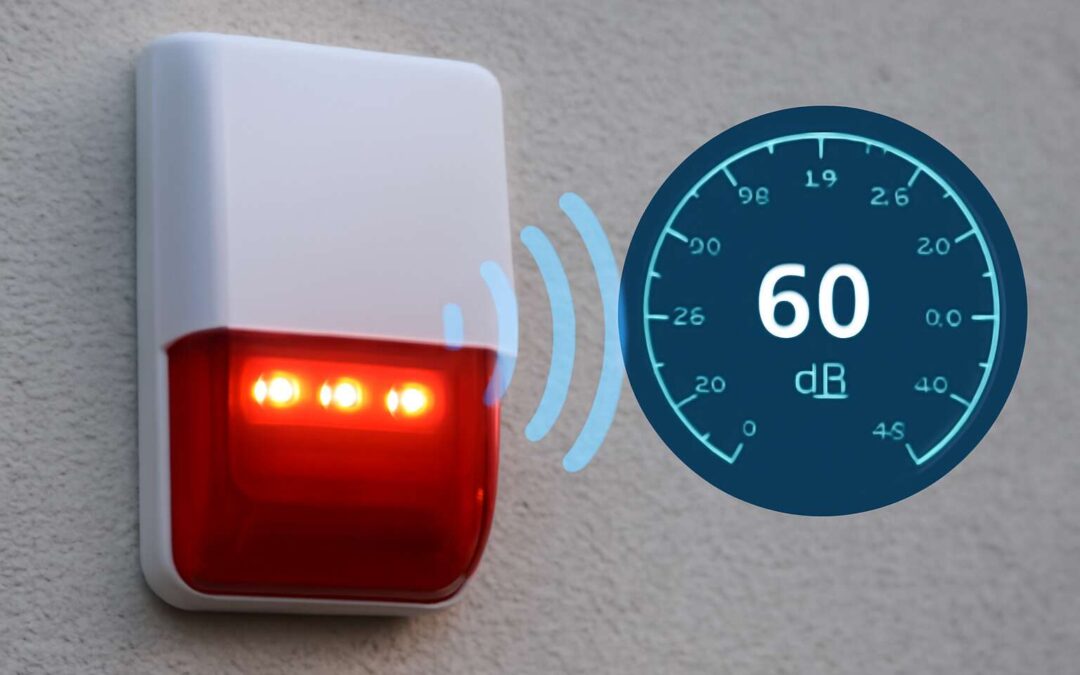
Understanding decibel levels in security alarms
What decibels mean in alarm systems
In South Africa’s crowded tapestry, a siren is not decoration but declaration. Statistically, a common outdoor alarm roars at 110–120 dB at the source, a sound that cuts through quiet streets and rattles the night like a bold proclamation.
Decibels measure sound pressure, not mood. That decibel level translates pressure into perception: 0 dB is whispers; 60 dB is a conversation; 110–120 dB is a siren’s roar. Distance and walls scrub sound away, so what travels to a distant hallway or street corner is a careful balance of power and patience. The security alarm decibel level is engineered to be heard beyond doors.
Consider what shapes that roar’s reach:
- tone and cadence
- distance from the device
- ambient noise and structural barriers
In the harmony of security, the alarm’s roar becomes both invitation and caution, a dramatic chorus that keeps intruders at bay and communities safer.
Common decibel ranges for residential alarms
South Africa’s busy cul-de-sacs require a burglar alarm to declare itself above everyday noise. For residential systems, the roar at the device usually sits in the 100–115 dB range, with outdoor sirens leaning toward 110–120 dB. That is not entertainment; it’s a formal public proclamation of security!
- Low-to-mid range residential units: roughly 95–105 dB at the source
- Standard setups: about 105–115 dB, balancing reach and noise
- Heavy-duty outdoor sirens: 110–120 dB to punch through street noise
Understanding the security alarm decibel level helps homeowners compare models while keeping the community’s ears grateful.
How decibel levels affect legal compliance
‘Loud enough to be heard, legal enough to be embraced,’ as one SA installer says, and that’s the essence of the security alarm decibel level. South Africa’s cul-de-sacs are noisy by design, so your siren must shout above the chatter without rattling the neighbours. Installers tune systems to punch through street noise while staying within bounds.
Decibel levels shape compliance because many municipalities specify a minimum and maximum SPL at the device, plus reporting requirements. A system that’s inaudible won’t deter; one that’s too loud invites complaints and fines.
To navigate the compliance maze, consider these touchpoints:
- Local noise bylaws and curfews that cap outdoor sirens
- Documentation: manufacturer ratings and installation certificates for SA standards
- Testing windows and maintenance schedules to prove ongoing compliance
Peak vs continuous alarm sounds
The security alarm decibel level isn’t about sheer volume alone; it’s about voice and timing. A siren’s peak can slice through street noise, grabbing attention without becoming a nuisance! In South Africa’s tight-knit cul-de-sacs, that balance matters—loud enough to deter, quiet enough to avoid civil complaints.
Understanding how peak and continuous sounds land in real spaces helps explain what actually happens when a siren triggers.
- Peak sounds are brief, high-intensity bursts that pierce through ambient noise.
- Continuous sounds sustain a steady presence to signal ongoing activity and ensure recognition indoors and outdoors.
- Acoustic design—siren placement, enclosure, and surroundings—shapes how the decibel level is perceived by neighbors and authorities.
Professionals tune these systems to the environment and the rules that govern noise in your area, ensuring the peak and continuous elements deliver deterrence while staying within bounds. This approach aligns with the bigger picture of security system performance and community peace.
Measuring and testing decibel levels in security alarms
Tools and methods for sound level measurement
Even in the quietest SA neighborhoods, a siren’s howl can ripple through the night. Measuring the security alarm decibel level matters more than vanity, shaping predictability and trust.
Tools and methods for sound level measurement blend precision with practicality.
- Class 1 sound level meter calibrated for dB(A)
- Acoustic calibrator for 1 kHz reference
- Data logger or app to capture trends
When readings are taken, consider A-weighting to match human hearing, note peak versus continuous output, and record environmental factors.
In South Africa, professionals align measurements with local expectations for safety and noise control, ensuring alarms respect neighborhoods while maintaining deterrence.
Testing frequency and best practices
A 2023 local survey found that homes with ongoing testing report 25% faster incident verification, proving that the security alarm decibel level is not vanity but a prompt of protection. In quiet SA towns and busy streets alike, the siren’s bite can reach across the night, signaling readiness and care.
Testing isn’t a one-off scene; it’s a measure of how reliably a system communicates danger. Professionals use calibrated equipment, a stable reference tone, and a clear approach that respects both peak and sustained output while accounting for wind, rain, and surrounding hum. The goal is a measurement that mirrors real life, not a lab.
In South Africa, local expectations around safety and noise control shape how readings are interpreted, ensuring properties deter intruders without disturbing neighbors. When the security alarm decibel level reads true to the moment, trust grows between households and responders, and communities feel seen.
Interpreting decibel readings and units
Sound is a negotiator in the night: the security alarm decibel level becomes a guardian that speaks to neighbors and responders alike. In South Africa’s streets—from quiet suburbs to busier corridors—the right reading turns unease into action and invites measured verification.
Interpreting these readings means distinguishing what the meter says about peak bursts versus steady background hum. The security alarm decibel level is reported with dB references, often using A-weighting to reflect human hearing; wind, traffic, and building layout color the result.
Common terms you may see include:
- dB SPL: unweighted sound pressure level
- dBA: human hearing-weighted level
- Peak vs. RMS: instantaneous versus averaged readings
When readings resonate with real-life conditions, communities feel seen and protected, and responders can react with confidence.
Regulatory standards and safety considerations
Global and regional standards for alarm decibels
Across the world, the security alarm decibel level is not an afterthought but a language of safety. Global standards sketch how loud is loud enough while protecting hearing: EN 54-3 and EN 54-24 define audible devices; IEC 61672 guides sound level measurement. In the shadows of policy, intent meets precision.
- European frameworks like EN 54-3/EN 54-24 govern audible warning devices and their regional interpretations.
- North American codes such as NFPA 72 pair performance with calibrated testing and clear documentation of results.
- South Africa follows SANS-aligned standards and local occupational-noise regulations to balance effective alerts with ear safety.
Regional differences weigh heavily on practice; safety considerations demand consistent calibration, traceable measurement, and transparent reporting to satisfy auditors and guardians of property alike!
Occupational safety and consumer protection limits
Sound is the currency of safety, and in South Africa regulators demand the coins fit the meter. “Calibration is the quiet guardian of loud alarms,” a phrase that keeps inspectors honest. The regulatory landscape marries occupational safety with consumer protection, ensuring the security alarm decibel level isn’t a bravado but a measured duty.
Regulatory priorities converge on calibration, measurement traceability, and transparent reporting to satisfy auditors and guardians of property alike. In practice, this means:
- Clear occupational-safety limits for exposed durations and peak events
- Traceable measurement data with documented calibration stamps
- Consumer-protection considerations that prevent misleading or excessively punitive alerts
The result is a balanced chorus: alarms loud enough to deter and clear enough to protect hearing, aligned with local standards and the expectations of insurers, building managers, and residents alike.
Variations between residential, commercial, and industrial settings
In the dim corridors where risk and reverie mingle, regulatory standards sculpt the security alarm decibel level into three distinct dialects for South Africa’s spaces. Regulators demand calibration and traceability, yet the tone must fit the room: quiet enough to spare residents’ hearing, loud enough to deter intruders, and aligned with insurer expectations.
Variations by setting follow a somber logic:
- Residential environments prioritize occupant comfort and hearing protection, favoring restrained peak events and calmer nocturnal soundscapes.
- Commercial spaces seek deterrence with clarity for staff and visitors, while maintaining service levels and prudent reporting.
- Industrial facilities tolerate tougher acoustics, guided by robust hearing-safety programs and resilient system integration.
Across all sectors, the aim is harmonizing regulatory safety with the psychological comfort of those who live, work, or pass through these spaces.
Audibility versus annoyance thresholds
Audible alarms have to walk a fine line: loud enough to deter, quiet enough to spare ears. The benchmark many safety teams reference is 85 dB over eight hours—a reminder that protection and comfort share the same stage. When South African spaces respond to this pressure, the goal is a trustworthy security alarm decibel level that resonates!
Regulatory standards demand audibility while guarding against annoyance. Calibration and traceability to national measurement systems ensure readings stay honest, repeatable, and inspector-friendly. Across South Africa, insurers and regulators alike seek documentation showing that alarms meet safety thresholds without causing stress or hearing fatigue.
- Audibility vs annoyance thresholds for occupants
- Calibration traceability and accredited testing
- Clear reporting for insurers and regulators
Ultimately, this balance threads security across residential, commercial, and industrial settings, translating safety into confidence for every corridor and crossroads.
Compliance testing and documentation
Across South Africa, insurers and regulators increasingly demand verifiable testing before underwriting, and the security alarm decibel level sits at the center of that trust. A valid reading isn’t merely loudness; it’s a documented claim of safety that inspectors can rely on in real-world corridors and crossroads.
Regulatory standards and safety considerations require compliance testing and documentation to be clear, traceable, and audit-ready.
- Independent, accredited laboratories perform calibration and acoustical testing
- Certificates are traceable to national measurement systems
- Reports are clear and inspector-ready for insurers and regulators
When these elements line up, protection speaks with authority across residential, commercial, and industrial spaces, turning safety into confidence in every doorway.
Design tips to optimize audible effectiveness
Balancing decibel level with sound quality and coverage
Audible alarms are more than noise; they are a public signal that something precious is at stake. A well-tuned alarm cuts through night quiet like a lighthouse. “Sound is the first line of perception and the last line of defense,” notes a South African security designer. In my experience, the right cadence earns trust.
Optimizing the security alarm decibel level means balancing reach with sound quality. The right balance is clear enough to deter intruders and considerate enough to respect neighbours and residents. Tone, timbre, and dispersion shape how the message travels while maintaining everyday comfort.
These decisions hinge on how the security alarm decibel level travels across spaces in South African homes and workplaces.
- Acoustic environment and dispersion patterns
- Integral harmonics and voice-like cues
- Compliance with regional quiet hours
Choosing alarm types: siren, voice alert, or both
In urban South Africa, a well-tuned alert acts more like social etiquette than mere noise. The right cadence earns trust faster than a glossy brochure, turning a potential disturbance into a clear call to safety!
Choosing alarm types—siren, voice alert, or both—naturally shapes reach and perception.
- Siren-only: broad deterrence, simple message
- Voice alert: clear instructions, less nuisance
- Hybrid: siren underlay with spoken guidance
That balance matters—calibrating the security alarm decibel level keeps intruders at bay while preserving neighbourly peace.
Impact of installation location on perceived loudness
Sound design in urban South Africa isn’t just about loudness; it’s about how sound travels. A well-placed alarm cuts through stairwells and open-plan rooms without turning the street into a constant show. When the security alarm decibel level is tuned to the space, alerts feel purposeful and credible rather than noisy clutter. That tuning makes all the difference!
Design considerations sit at the intersection of acoustics and daily life. Sound travels best when paths to common rooms stay unobstructed.
- Unobstructed paths help sound reach living areas.
- Interior materials shape how signals carry.
- Reflective surfaces extend reach but can echo.
- Listening is influenced by where people spend time—bedrooms, lounges, entrances.
Exterior versus interior placement shifts how sound interacts with the environment. Orientation toward busy zones tends to maximize perceived loudness without inviting universal nuisance. The point is to balance reach with courtesy, so alerts remain credible anchors of safety rather than disruptive noise.
Maintenance and battery considerations that affect volume
Within South Africa’s quiet streets, the strongest alarm is the one that speaks without shouting. ‘The strongest alarm is the one you hardly notice until you need it,’ a carpenter of security told me. The security alarm decibel level must be tuned to the room, so alerts cut through corridors and parlours without turning the street into a theatre of noise.
Maintenance and battery considerations shape how loudly and how long signals linger. A tired battery surrenders power at the worst moment, and voltage drift can dull a siren’s ferocity. Keep the energy pulse steady, and the walls remain vigilant, not vindictive.
Sound here is a companion, not a gaoler; adjust for reach, not for spectacle. The security alarm decibel level, allowed to breathe, makes safety feel earned—an anchored chorus in the house that refuses to scream into the night.
