
Understanding Security System Backup Power
What is a backup battery for alarms and security panels?
Power outages are the unseen headaches of modern security. As the saying goes, “Power is the quiet backbone of security.” A security alarm back up battery ensures alarms stay alert when the mains vanish, keeping detectors online and sirens ready during load shedding.
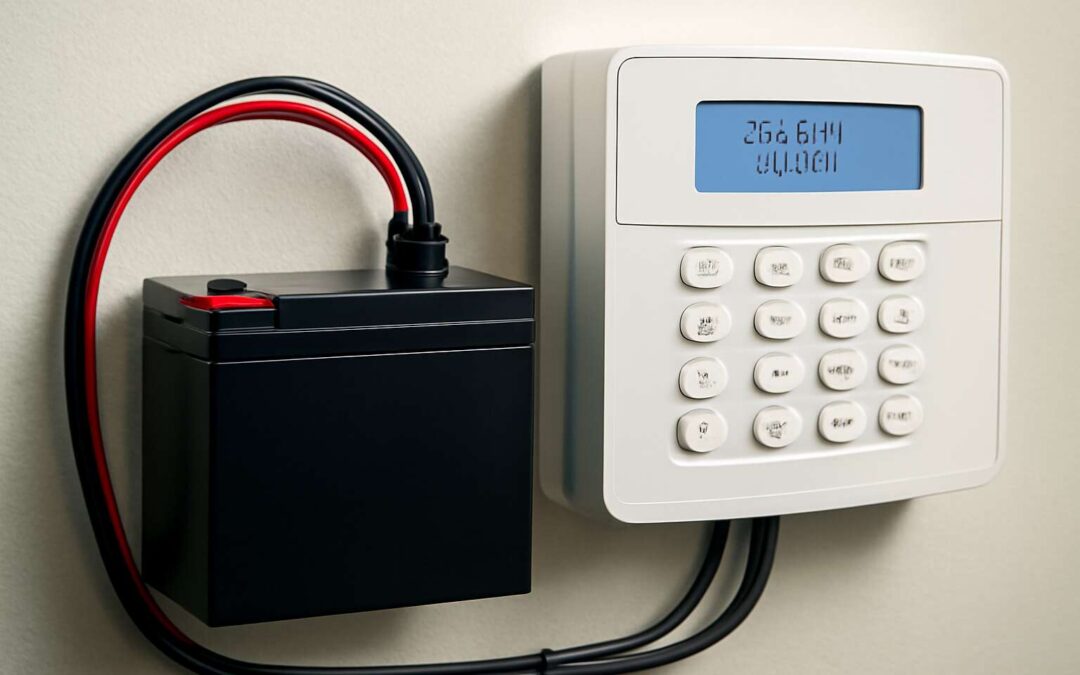
What is a backup battery for alarms and security panels? It is a rechargeable cell that fills in when mains power drops, letting the control panel, keypad, and sensors stay alive long enough to summon help or trigger a local alert. This energy reserve should be matched to the panel and provide continuous operation during outages.
In South Africa, a dependable security alarm back up battery helps bridge daily disruptions and keeps monitoring stations informed even when Eskom is playing hide-and-seek with the lights.
Why reliable backup power matters for home and business security
Power outages aren’t a rare inconvenience in South Africa — they’re a daily test for security. When mains fail, every link in your system— keypad, sensors, and siren—hangs in the balance. That’s why understanding backup power matters. A security alarm back up battery keeps the system alert even when the lights go out, buying time to summon help or trigger a local alert.
These batteries are rechargeable, sized to match your panel, and designed to deliver continuous operation through outages. In practice, the right choice is a datasheet decision, not a guess — I’ve seen how a properly matched battery buys hours of uptime and preserves deterrence when Eskom is playing hide-and-seek.
Key considerations include:
- Capacity and runtime that reflect daily usage
- Battery type and maintenance needs
- Temperature tolerance
- Regular testing and replacement scheduling
Common types of backup power for security systems
When the grid falters and South Africa’s lights flicker, your security remains the quiet witness. Power outages are a daily fact here, shaping how families safeguard what matters. That is why a security alarm back up battery is not optional; it keeps the siren ready and sensors listening long after mains fail, buying precious minutes to respond.
Understanding backup power means knowing the common types that reliably bridge the darkness:
- Uninterruptible Power Supplies (UPS) that ride out short outages.
- Rechargeable batteries designed to fit your security panel.
- Standby generators for longer blackouts.
- Solar-powered storage that tops up during daylight.
Each option brings its own rhythm—quiet, steadfast, and ready to wake the moment light returns. Regular testing and scheduled replacement keep deterrence intact and the system awake when needed most.
How backup batteries integrate with panels, sensors, and sirens
“When the grid fails, the real guardians stay awake,” a security tech whispered. In South Africa, outages are routine, and the interface between backup power and protection becomes a quiet, relentless ally. The security alarm back up battery powers the panel’s heartbeat through darkness.
Backup batteries plug into the security panel, feeding its processor and the connected zones. When mains drop, the panel draws from stored energy, so sensors remain responsive and the siren can still deter intruders.
- Keeps the panel’s brain alive during outages, preserving a cohesive security footprint.
- Preserves sensor operation, so door and window contacts stay monitored.
- Maintains siren readiness, ensuring deterrence even when mains falter.
In the quiet hours, this partnership feels almost supernatural—an unseen anchor keeping watch while the grid forgets to glow.
Key specifications to compare when selecting a battery
“In the stillness, a second heartbeat matters,” a technician once whispered. South Africa’s outages march on, and the security of a home or business hinges on what waits in the wings. Understanding the key specifications of a security alarm back up battery is not trivia; it’s a quiet guarantee that keeps alert systems in rhythm when mains fail.
- Capacity (Ah) and runtime implications for your zones
- Voltage, chemistry, and compatibility with your panel
- Cycle life and depth of discharge to estimate longevity
- Temperature tolerance and self-discharge for local climate
- Size, form factor, and mounting considerations
Examining these specs helps compare options without blind faith, ensuring the security alarm back up battery aligns with a site’s load profile, sensor density, and siren demands. In the dark, precision matters more than bravado!
Types of Back Up Batteries for Security Alarms
Sealed lead-acid (SLA) vs. Li-ion cells for alarm back-up
Power outages are as South African as braais, and your alarm’s resilience is measured by its backup power. Sealed lead-acid (SLA) vs Li-ion cells are the two dominant paths for a security alarm back up battery. SLA offers budget-friendly ruggedness and slower fade, but it’s heavier and bulkier; Li-ion packs more energy in a lighter frame and recharges faster, yet costs more and demands temperature-aware management.
- SLA: rugged under heat and dust, cheap upfront, but heavy and slower to recharge; good for static panels.
- Li-ion: high energy density, lighter, compact, fast recharge; best for small systems and modern panels, but pricier and needs protection circuitry.
- Note: In heat, Li-ion can lose capacity faster; ensure proper charging and ventilation.
For South African homes, space, climate, and budget decide the security alarm back up battery choice.
Nickel-based chemistries and why they are less common in alarms
Power outages aren’t a problem to be solved—they’re a fact of life here, and the security alarm back up battery that keeps doors and sensors responsive is the quiet heartbeat of home protection. Nickel-based chemistries, namely NiCd and NiMH, show up less in modern alarm systems. They battle memory effects and cadmium toxicity in NiCd, and NiMH wrestles with self-discharge and temperature sensitivity, making them clumsy compared with Li-ion or SLA in daily duty.
- NiCd cells are rugged and tolerate quick discharges, but contain cadmium and carry environmental and regulatory baggage, pushing new installs away.
- NiMH offers higher energy density than NiCd yet suffers notable self-discharge and temperature sensitivity, which undermines reliable 24/7 backup performance.
For South Africa, the trend favors chemistries with stable energy delivery and safer handling—nickel-based options are increasingly rare in alarm back up systems, replaced by Li-ion or SLA options.
Recharge time, cycle life, and depth of discharge
Power outages are a fact of life, and a security alarm back up battery is the quiet guardian that keeps doors and sensors awake when the grid fails. Today’s market favors SLA and Li-ion, each with distinct recharge tempos, cycle lifespans, and depth of discharge guidelines.
Recharge times and endurance differ, shaping how you plan for a nighttime blackout. Here’s a quick snapshot:
- Recharge time: SLA 24–48 hours; Li-ion 2–4 hours
- Cycle life: SLA 300–500 cycles; Li-ion 1000–2000 cycles
- Depth of discharge: SLA ~50%; Li-ion ~80–90%
In South Africa, thermal resilience and safe handling push preference toward chemistries that deliver steady energy under heat and duty, keeping the security system vigilant through every interruption.
Performance in extreme temperatures
Heat is the quiet adversary of standby power. In South Africa, blistering afternoons test every battery’s nerve, but two chemistries rise to the challenge: SLA and Li-ion. I’ve watched heat-knotted days push storage to the edge, and a reliable security alarm back up battery keeps doors and sensors online when the grid goes dark; SLA handles heat with rugged casings, while Li‑ion packs deliver higher energy density but need thermal management to stay steady.
Extreme-temperature performance at a glance:
- SLA: rugged in heat, steady discharge.
- Li-ion: high density, needs cooling.
- Climate in SA tests both chemistries.
Choosing the chemistry depends on climate, duty cycle, and how long outages endure; a reliable security alarm back up battery keeps systems vigilant.
Maintenance considerations and warranty coverage
Power interruptions stalk South Africa like a heatwave—the grid yawns as afternoons scorch the air. In that theatre, the right security alarm back up battery keeps doors and sensors vigilant when cables go quiet and the lights blink out.
Maintenance matters more than you think. Regular checks of charge state, terminal cleanliness, and replacement timing prevent drama during outages.
- Visual inspection and corrosion control
- Ensure proper disposal and recycling of old cells
- Confirm panel compatibility with charging profile
Warranty terms vary by brand and chemistry. They typically cover manufacturing defects and normal use, with exclusions for improper installation, misuse, or environmental damage. In SA, service networks and local support help honour these guarantees.
Quiet, reliable, and unassuming, a well-maintained backup system keeps security watching over your property when the lights stay off. That reliability shows in a security alarm back up battery, quietly doing its job when you need it.
How to Size and Choose the Right Battery
Assessing load and runtime needs for your security system
With load shedding now a daily reality in South Africa, a security system is more than an amenity—it’s a safety net! The right security alarm back up battery keeps the protection alive when the mains fail, letting cameras and alarms continue their vigil and preserve peace of mind.
Sizing starts by tracing the load and the runtime you seek under outage conditions. Picture the panel, detectors, and interior sirens as a small orchestra that must perform without interruption.
- Total standby current of all devices
- Projected outage duration you want to cover
- Temperature and aging effects on capacity
From there, balance becomes the principle—capacity, compatibility, and longevity—so the security alarm back up battery serves without excess. The right match respects your panel’s needs, the local climate, and your budget, keeping protection steadfast.
Estimating power consumption of panels, cameras, and sensors
When South Africa’s load shedding hits, a security system must stand its ground. In many communities, outages creep into four to six hours weekly—enough to test any system’s mettle and composure.
To size, start with the total standby current of panels, cameras, and sensors and the planned outage duration. Translate your needs into Ah by multiplying current (A) by hours (h) and adjusting for voltage. Then select a battery with 20-30% extra capacity, and ensure temp rating suits SA summers.
With the right sizing, the security alarm back up battery keeps vigil through darkness, quietly and reliably, offering a calm counterpoint to the chaos outside.
Calculating required amp-hour rating for your setup
Four to six hours of outages a week test any security setup. The answer isn’t luck—it’s sizing done right.
To size, add up total standby current from panels, cameras, and sensors. Convert that draw into amp-hours by multiplying current (A) by hours (h) and correcting for system voltage. Then allow a 20–30% margin and pick a battery that matches the temp swing of SA summers. This is how the security alarm back up battery stays ready.
- Surge and runtime demands
- Temperature range and humidity
- Charging compatibility with your panel
- Warranty and serviceability
When sizing is done with care, power stays constant even as the city goes dark.
Following manufacturer recommendations and compatibility checks
Sizing a security alarm back up battery isn’t luck—it’s a disciplined craft grounded in manufacturer recommendations and compatibility checks. When the panel, cameras, and sensors share a common power rhythm, outages become a test of readiness rather than a vulnerability. In South Africa’s summer heat, getting the size right keeps the system steadfast and responsive—the security alarm back up battery staying ready when the grid falters.
Manufacturer recommendations and compatibility checks guide the selection: voltage and connector compatibility align with the panel, the chemical type harmonises with climate and humidity, and the charging profile matches the panel’s circuitry. This approach minimizes mismatches, guards against overcharging, and preserves cycle life.
With diligence, the right choice blends reliability and longevity, safeguarding premises and data. That approach keeps the security alarm back up battery a quiet sentinel.
Planning for future expansion and firmware updates
SA summers bring rolling blackouts; that makes the security alarm back up battery not a luxury but a necessity. Sizing isn’t guesswork—it’s aligning capacity with expected runtime and future loads. As one installer notes, “A battery that fits today can’t carry tomorrow’s firmware if it’s under-sized.” The right match keeps panels, cameras, and sensors responsive when the grid falters.
Consider future expansion and firmware update scenarios:
- Headroom for added devices and longer runtimes
- Compatibility with upcoming firmware power demands
In the end, the right security alarm back up battery blends reliability with longevity, supporting a secure perimeter across seasons.
Installation, Replacement, and Maintenance Tips
Step-by-step safe replacement procedures for alarm batteries
South Africa’s grid isn’t shy about dramatic entrances; load shedding lengthens its stage, and a security system that dies at dusk is the counterfeit of reliability. The security alarm back up battery is the quiet ally that keeps alerts humming when power stumbles.
Installation calls for respect of the panel’s manual and the device’s enclosure. Fit a like-for-like rating, keep terminals clean, and place the unit in a dry, ventilated nook away from heat.
Replacement should be prompted by performance hints rather than vanity—noticeable dips in runtime, unusual warmth, or warning indicators. Always match the manufacturer-recommended chemistry and capacity, then re-test the panel’s status indicators to confirm continuity.
Maintenance tips
- Inspect for corrosion and clean gently.
- Keep the area free of dust and moisture.
- Verify charging is active and that the panel sees the backup battery regularly.
- Schedule professional checks for firmware integration.
Recognizing battery health indicators and alert signals
Installation stands as a quiet rite of reliability: consult the panel manual, fit a like-for-like rating, and scrub the terminals clean. Place the unit in a dry, ventilated nook, away from heat or moisture. The security alarm back up battery deserves careful cradle, so it can hum through dusk’s shadows.
Replacement should be guided by performance whispers, not vanity—runtime dips, unusual warmth, or panel alerts signal it’s time. Always match the recommended chemistry and capacity, then re-check the status indicators for continuity with the security alarm back up battery in mind.
- Check chemistry
- Verify polarity
- Test after fit
Maintenance tips sustain that nocturnal guardian: inspect for corrosion and clean gently, keep the enclosure free of dust and moisture, verify the charger is active and the panel sees the battery regularly. Schedule professional checks for firmware integration to preserve harmony across devices.
Replacing batteries in panels, keypads, and wireless devices
Installation is the quiet rite of reliability. Treat it with care: consult the panel manual, select a like-for-like rating, and scrub the terminals clean. Place the unit in a dry, ventilated nook, away from heat or moisture. Secure the security alarm back up battery snugly so it hums through dusk’s shadows.
Replacement should be guided by performance whispers, not vanity—watch runtime dips, unusual warmth, or panel alerts as telltales. A brief checklist helps:
- Confirm chemistry compatibility
- Verify polarity after connection
- Test function and panel communication
Maintenance tips keep that guardian vigilant: inspect for corrosion, clean gently, and keep the enclosure free of dust and moisture. Verify the charger is active and the panel reads the battery regularly. Schedule firmware checks to preserve harmony across devices.
Disposal, recycling, and environmental considerations
Installation is the quiet prelude to security certainty. Find a dry, ventilated corner away from heat and moisture, then cradle the security alarm back up battery securely so it hums through dusk’s shadows.
Replacement should be guided by performance whispers, not vanity—watch runtime dips, unusual warmth, or panel alerts as telltales. When you swap the security alarm back up battery, verify compatibility and polarity to avoid a faux pas.
Maintenance tips keep that guardian vigilant: inspect for corrosion, clean gently, and keep the enclosure free of dust and moisture. Verify the charger is active and the panel reads the battery regularly.
Disposal, recycling, and environmental considerations.
- Recycle through SA-approved electronics recyclers.
- Follow local e-waste guidelines and avoid landfill.
- Choose take-back schemes aligned with SA standards.
Common mistakes to avoid during installation and replacement
Power is the quiet sentinel that holds a security system together when storms of blackouts roam South Africa. In these moments, the security alarm back up battery becomes the steadfast guardian—I’ve seen it preserve access control and peace of mind as dusk settles over the city!
Installation and replacement demand respect for rhythm and fit. Verify compatibility and observe polarity to avoid a faux pas. Common mistakes to avoid during installation and replacement:
- Ignoring polarity markings
- Over-tightening connectors
- Using an incompatible charger
Maintenance keeps the guardian vigilant: inspect for corrosion, dust, and moisture, and verify the charger’s output remains steady. Watch panel alerts and battery health indicators for subtle declines, so the system remains a silent sentinel through the night and into the morning bustle.
