
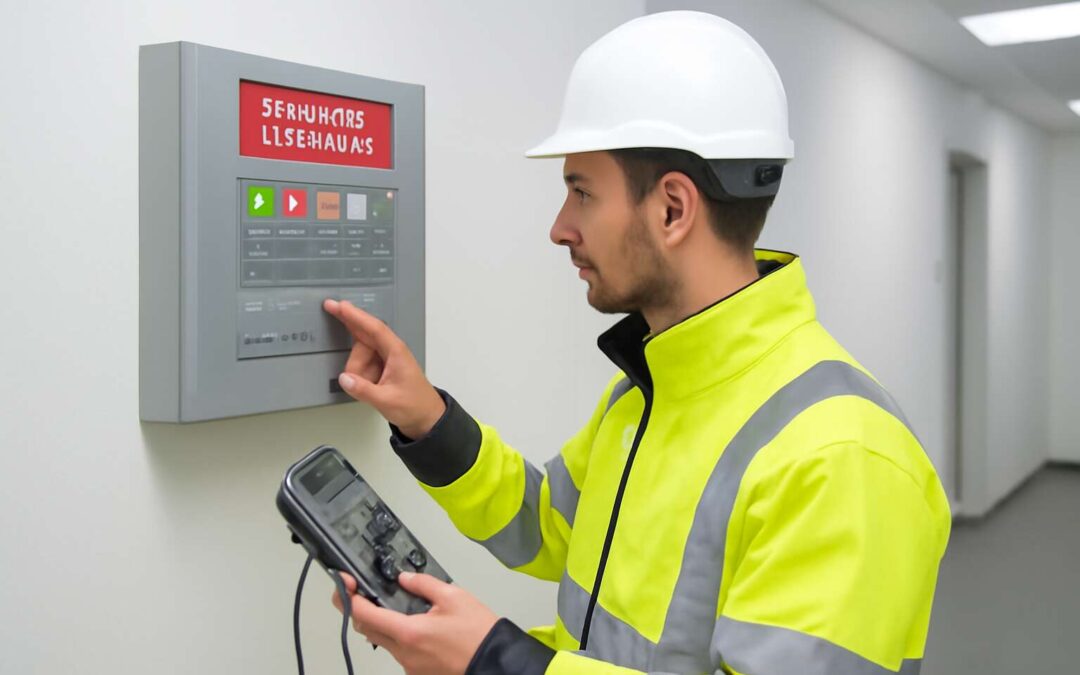
Fundamentals of Fire Alarm Fault Finding
Common Causes of Fire Alarm Faults
Faults in fire alarm systems ripple through a building, wasting time and risking safety. “Prevention is cheaper than cure,” a veteran safety engineer says. This fire alarm fault finding guide distills the essentials you need to identify faults quickly, with South Africa’s standards in mind.
Common causes include sensor drift, blocked detectors, wiring faults, and power interruptions. Environmental dust, humidity, and temperature swings also mislead detectors.
- Dusty or blocked detectors
- Wiring faults and loose connections
- Power supply issues and battery faults
- Incorrect sensor type or placement
- Environmental factors (dust, humidity, temperature)
Understanding fault indicators, logs, and testing sequences helps technicians isolate root causes rather than chase symptoms. A structured, repeatable process—test, log, verify—reduces downtime and keeps sites compliant. The fire alarm fault finding guide serves as a practical compass.
Understanding Fire Alarm System Components
This fire alarm fault finding guide starts with a bold premise: know the system, and the drama stays outside the building. In South Africa, where compliance is a non-negotiable soundtrack, understanding the architecture helps you see past blinking LEDs and the blare of horns to the real intelligence at work—how components talk, share data, and keep occupants safe without turning a drill into a full-scale epic.
Fundamentally, you’re looking at four core cogs: the control panel (the brain), sensors and initiating devices (the ears), the power supply (the heartbeat), and the wiring/communication backbone (the nervous system). To keep this readable, consider the essential components you’ll encounter in any installation:
- Control panel and software interface
- Detectors and initiating devices
- Power supply, battery backup, and monitoring
Know these parts to trace faults instead of chasing phantoms.
Safety and Compliance Considerations
In a building where safety is measured in seconds, quiet discipline does the heavy lifting. “Reliability is built in the quiet hours,” a safety officer whispered to me during a site audit in Cape Town. In South Africa, compliance standards frame every check with accountability and rigor.
This fire alarm fault finding guide treats safety and compliance as two sides of the same coin, where risk awareness, proper documentation, and licensed oversight anchor every inspection. Beyond blinking LEDs, the real work is governance—traceable records, routine verification, and confidence in the people who maintain the system.
- Licensing and standards alignment
- Documented inspection and maintenance records
- Competent personnel and independent verification
Key Terminology in Fault Diagnosis
In a sector where seconds decide safety outcomes, a striking stat lingers: up to 40% of fault investigations stall on vague terminology. Translating symptoms into precise language is not ornament; it’s the first diagnostic cue. Fundamentals of Fire Alarm Fault Finding Key Terminology anchor the way we interpret signals, document findings, and escalate issues. This vocabulary has proven its value on complex Cape Town sites, where accountability, traceability, and disciplined fault diagnosis meet the law, indeed!
At the core, terms like detector, initiator, control panel, and end-of-line device map the system’s heartbeat, a living map. Understanding zone architecture, supervision, and fault indication helps distinguish real faults from nuisance alerts.
- detector sensitivity
- end-of-line resistor
- zone mapping
- supervision status
These terms sharpen communication between on-site technicians and office-based engineers, ensuring fault diagnosis remains precise, auditable, and aligned with the fire alarm fault finding guide.
Documentation and Record Keeping
Across rural and urban sites, the heartbeat of every system is the paper trail. A field review found that when records are incomplete, response times drift and questions linger long after the alarm subsides. Clear documentation is safety’s first language, spoken by technicians and operators in daily duty.
From daily log entries to maintenance certs, documentation supports accountability, traceability, and audit readiness. The fire alarm fault finding guide anchors the capture of faults, actions, and outcomes in a version-controlled narrative that engineers and technicians can trust.
- Date and time stamps for each fault event
- Asset identifiers: detector, zone, and panel
- Sign-off records showing responsibility and review dates
Preliminary Checks Before Troubleshooting
Visual Inspection of Panels and Detectors
This fire alarm fault finding guide opens with a quiet truth: a dim panel can loom larger than the chorus of alarms it should summon. A quiet panel is a loud alarm waiting to happen, and it asks us to listen first. Before you troubleshoot, preliminary checks set the stage with patience, respect for life safety, and a South African care for buildings of many generations.
- Power supply integrity and battery status
- Indicator LEDs and panel messaging
- Recent maintenance history and change logs
- Environmental factors affecting detectors
Visual inspection of panels and detectors invites a quiet detective’s gaze: note aging, corrosion at connectors, dust along gaps, loose cabling, or misalignment. Look for signs of tampering and ensure mounting remains secure. In South Africa’s varied climates, these reflections help honour the system’s fidelity and the people who rely on it.
Power Supply and Back-Up Battery Checks
“A building’s safety is only as strong as its weakest link.” This first truth greets the fire alarm fault finding guide as we prepare for fault diagnosis. Start with a careful appraisal of power supply integrity and back-up battery status: is mains voltage stable, are batteries within their expected age, and do the chargers stay in step? In South Africa, voltage dips during storms and load shedding can masquerade as faults, so observe the panel’s history and any recent fluctuations. A quiet, methodical approach saves lives and preserves system fidelity.
Next, verify indicator LEDs, panel messaging, and the state of cabling to spot aging or loose connections before deeper probing. In our South African climate, patience and precision are the surest safeguards, turning fragile signals into reliable guardians of life safety.
Circuit Integrity and Wiring Inspections
Preliminary checks are the quiet hinge on which fault diagnosis turns. In the fire alarm fault finding guide, you honor a patient, contemplative pace. In South Africa, storms and load shedding remind us that signals can mislead; history is data, not doctrine.
The panel’s language offers counsel: LEDs, fault codes, and text messages—they should be read as a diary of events. The cabling’s condition speaks too: aging insulation, kinks, and occasionally loose terminations tell a story before any probing goes deeper.
Good starting cues include:
- Visible wear on cabling and terminations
- Inconsistent panel messaging across events
- Evidence of environmental stress, such as dust or heat exposure
From this quiet audit, trust grows that the fire alarm fault finding guide will reveal more than faults—it reveals patterns and responsibility.
Alarm Zone Mapping and Schematic Review
In the quiet hum of a building, preliminary checks are the hinge on which fault diagnosis turns. Before you chase a fault in alarm zone mapping and the schematic review, let the environment speak: in South Africa, storms and load shedding remind us signals can mislead. The fire alarm fault finding guide urges patience, turning raw data—zones, labels, and panel messages—into a coherent diary that reveals what must be checked first, not merely what seems wrong.
- Zone map consistency with floor plan labels
- Device identifiers and tag references that stay current
- Historical panel messaging versus the present state
From this quiet audit, the schematic review becomes narrative rather than navigation. Let mismatches between drawings and the panel’s story be clues, not errors to blame. A careful eye here nudges fault diagnosis toward patterns and responsibility, not panic—an ethos South Africa’s built environments deserve.
Access Control and Interface Wiring Considerations
Preliminary checks set the stage for troubleshooting access control interfaces. In many buildings, the interface between door controllers and the fire panel is where symptoms hide. The fire alarm fault finding guide stresses confirming power status, panel messages, and basic connectivity before chasing a fault in wiring or zones. With South Africa’s unpredictable power cycles, it’s prudent to rule out transient events seeded by outages or surges before deeper diagnosis.
Key preliminary checks include:
- Power to the fire panel and the interface is stable, with back-up battery status confirmed
- Connectors are tight, labels align with site documentation, and there are no cross-wires between fire and security circuits
- Wiring polarity and continuity for interface cables are verified, with notes on any splices
Interface wiring considerations must balance reliability with future scalability. Route cables away from high-power feeders, use dedicated fire alarm cabling for interlocks, and maintain consistent color-coding and tagging so the panel’s story remains coherent.
Systematic Fault Finding Techniques
Layered Testing Approach
In the quiet of a building before the siren, I have learned that a single fault can loom like a fragile ember. The fire alarm fault finding guide teaches a disciplined, layered testing approach that reveals truth through measured steps rather than guesswork.
- Assess primary power and backup battery health to confirm stable energy supply.
- Isolate circuits and test detectors sequentially, avoiding disruption to the whole system.
- Trace panel interconnections and wiring, verifying device addressing and zone continuity.
From there, method and patience converge; the approach respects SA standards and the practical gospel of safety, turning uncertainty into reliable operation. The fire alarm fault finding guide remains a beacon for engineers who chase clarity in the dark.
Using Test Equipment and Diagnostic Tools
“Every second a fault hides in silence; every second without detection costs safety,” a seasoned technician warns. In this realm of circuits and echoes, precision leads the way, and the fire alarm fault finding guide becomes a map through the dark.
Systematic fault finding uses test equipment and diagnostic tools to trace a fault along the signal path, separating noise from truth and turning chaos into clarity. A concise gearset helps practitioners chart detector responses without disrupting operation.
- Handheld multimeter and continuity tester
- Insulation resistance tester (megohmmeter) and cable tester
- Portable oscilloscope or data logger for timing and fault signatures
With SA standards as a compass, these instruments become staves for the craftsman, translating raw signals into reliable performance and safeguarding lives within the built environment.
Interpreting Fault Codes and System Logs
One in three fault investigations stalls because fault codes are misread—a startling truth that echoes through South Africa’s busy buildings. In the fire alarm fault finding guide, interpreting fault codes and system logs becomes a lantern in the dark, revealing how a sequence of events unfolds. I trace the trail from code to consequence, turning cryptic messages into a clear narrative that guards lives and property.
- Fault codes are interpreted in the context of the event timeline and zone mapping.
- Codes are cross-checked against service history and recent changes.
- System timestamps are examined for alignment with sensor activity and panel messages.
System logs capture heartbeats, polls, and alarms; read them with calm, methodical attention, then translate the dialogue into actionable insight without rushing to conclusions.
Isolating Faulty Loops and Detectors
In the bustle of South Africa’s commercial hubs, a stubborn fault can linger like a misunderstood melody. Three in ten investigations stall because fault codes are misread, but a careful fire alarm fault finding guide turns that discord into a coherent score where loops and detectors reveal their stories through timing and sequence.
Systematic fault finding techniques focus on isolating faulty loops and detectors. Work unfolds as a calm, methodical narrative: trace loop integrity, verify detector response characteristics, and align every panel message with the event timeline. Within the fire alarm fault finding guide, you discover the cadence of circuits.
- Loop isolation concepts for wiring and zones
- Detector response profiling and timing patterns
- Timeline cross-checks against panel messages
With patience, the chaos becomes clarity, and the living building speaks through its alarms, guiding engineers toward understanding without rushing to premature conclusions.
Common Fault Patterns and How to Recognize Them
Across South Africa’s busiest commercial hubs, faults whisper rather than shout—yet 70% of investigations stall because patterns go unread. The fire alarm fault finding guide teaches you to hear that whisper, to read how loops and detectors align in timing and sequence, turning confusion into a coherent score.
Three patterns recur with telling clarity—intermittent loop faults, detector drift, and environmental triggers—each hinting at a different root.
- Intermittent loop faults from loose connections or corroded terminations
- Detector response drift due to aging, contamination, or buildup
- Environmental triggers such as dust, HVAC flow changes, or smoke particulates
To recognize them, I watch for misaligned times and cascading panel messages, cross-checking against the building layout and event chronology. This is the core of the fire alarm fault finding guide.
Troubleshooting by System Type
Addressable vs Conventional Panels
In a bustling facility in South Africa, a fault on the fire alarm can halt operations for hours. This fire alarm fault finding guide compares troubleshooting by system type—addressable versus conventional panels—and why the distinction matters. Addressable panels map each detector to a unique address, delivering pinpoint fault location; conventional panels illuminate zones, which can mask the exact culprit but keep wiring straightforward.
- Addressable: address consistency, backplane communication, end-of-line supervision
- Conventional: zone wiring continuity, loop isolation, shared power concerns
When diagnosing by type, the approach shifts. For addressable systems, the panel’s device status and the address map reveal the misbehaving unit; for conventional systems, zone integrity and loop reliability become the focus.
Detector Types: Ionization, Photoelectric, Heat Detectors
In a fast-paced South African facility, the fire alarm fault finding guide helps teams cut downtime and keep operations humming. When troubleshooting by system type, detector type becomes the compass, guiding you toward the right test and replacement path.
- Ionization: fast flame detection, sensitive to dust.
- Photoelectric: excels with smoldering fires, lower false alarms.
- Heat detectors: rugged, reliable in harsh environments.
By aligning fault-hunting steps with the detector type, teams improve accuracy and cut troubleshooting cycles.
Fire Alarm Control Panels and Interfaces
In the control room, the panel is the heartbeat of the system; when misfires echo, the fire alarm fault finding guide helps translate digital whispers into steady action. Troubleshooting by system type positions the control panels and their interfaces as the compass, pointing technicians toward the right diagnostic weather—where signal integrity and panel communication meet. It’s a dance of connections and logic, performed with precision and care.
Within the panels and interfaces, clues hide in plain sight: the flow of information across gateways, the clarity of annunciators, and the rhythm of power rails. Consider these high-level checks:
- Interface wiring integrity and connector health
- Gateway communications and annunciator status
- Network fault indicators and log correlation
This disciplined lens keeps South African facilities humming, even under pressure.
Notification Appliances: Strobes and Sirens
Across South Africa’s facilities, the loudest fault isn’t a crackle in the wires but a muted chorus from notification appliances. “The voice of a system lives in its strobes and sirens,” a seasoned technician says, and this fire alarm fault finding guide teaches you to listen for that voice with discipline.
Troubleshooting by System Type for notification appliances—strobes and sirens—examines how devices speak to the control panel and users. The focus is on timing, visibility, and audibility, linking discrepancies to the system’s architecture with caution.
- Power supply integrity to strobes and sirens, including back-up
- Synchronization of light and sound cues
- Annunciator status and gateway health
- Wiring continuity and device-specific diagrams
These high-level checks keep the system’s voice clear, even under pressure.
Smoke and Environmental Monitoring Considerations
In the fire alarm fault finding guide, a veteran technician quips, “The environment is the true conductor of a system.” Across South Africa’s facilities, air quality often drowns out the loudest siren—making environmental monitoring a fault-finding essential.
Troubleshooting by System Type for Smoke and Environmental Monitoring Considerations means focusing on how air flow, dust, humidity, and contaminants alter detector sensitivity. When drafts pull away from a unit or humidity sways a chamber, the voice of the system can misread the room.
Key environmental factors to watch in this context include:
- Dust and particulates in detector chambers
- Humidity and condensation
- HVAC airflow patterns
Maintenance, Verification, and Compliance
Scheduled Testing and Inspection Protocols
Maintenance is the quiet shield behind a trusted fire system. In South Africa, routine upkeep cuts false alarms and extends equipment life. Clean optics, check sensor alignment, inspect enclosures, and verify battery connections. Small neglects breed big frights—stay proactive rather than reactive.
- Cleanliness and lens alignment
- Battery health and charging indicators
- Enclosure integrity and tamper seals
Verification is the moment of truth. In the fire alarm fault finding guide, verification is treated as layered checks: software status, sensor responses, and loop integrity. Document every step and restore state accurately. In my experience, clear logs reduce downtime and empower teams when the siren returns to silence.
Compliance hinges on scheduled testing and inspection protocols. Adhering to local codes, keep a documented calendar, validate interlocks, and ensure auditable records. Consistency here protects lives and preserves the relevance of your process.
Documentation for Compliance Audits
Post-Repair Verification and System Acceptance
Maintenance after a fault was fixed isn’t glamorous, but it’s the hero of reliability. Clean sensor housings, check for corrosion, replace exhausted batteries, verify tamper seals, and confirm that detection thresholds haven’t drifted. A sweep of wiring and connectors keeps anomalies at bay. In the context of a fire alarm fault finding guide, this step turns repairs into safety.
After repair, verification ensures the system does what it says on the tin. Consider functional testing, zone annunciation consistency, power supply and back‑up battery status, and integrations with building management or ESC control. A checklist helps capture results.
Compliance post-repair verification and system acceptance cement the handover. It centers on documentation clarity, client sign-off, and alignment with local fire safety regulations in SA. When acceptance is granted, the site enters its next maintenance cycle and audit-ready status.
Firmware Updates and Logger Management
Maintenance is the quiet custodian of reliability. In the theatre of alarms, routine care—sensor housings, connectors, and battery health—keeps a system from slipping into silence. Within the fire alarm fault finding guide, these deliberate breaths sustain response times and deter cascading faults.
Verification follows repair like a careful juror weighing evidence. It confirms status indicators align, back-up power holds, and interfaces with building management stay coherent. In South Africa, this phase is as much about proof as it is about peace of mind, ensuring the system speaks truth to alarms.
Compliance, firmware updates, and logger management tie the knot. Proper version control and tamper-evident logs safeguard audits and future-proof the installation.
- Firmware version control and baselining
- Secure, tamper-evident logger management
- Regular archival and audit trails
Training and Handover Procedures
Maintenance is the quiet custodian of reliability. In the fire alarm fault finding guide, routine care—sensor housings, connectors, and battery health—keeps a system from slipping into silence. Regular checks prevent cascading faults and ensure response times stay swift through the unrest of the night!
Verification follows repair like a careful juror weighing evidence. It confirms indicators, back-up power, and interface coherence with building management. In South Africa, this phase doubles as proof and peace of mind, validating the system speaks truth to alarms.
Compliance and training seal the deal. A robust handover procedure documents version history, certifies operator competence, and archives test records for audits.
- Training completion and competency sign-off
- Handover pack with as-built drawings and calibration certificates
- On-site operator briefing and acknowledgement
