
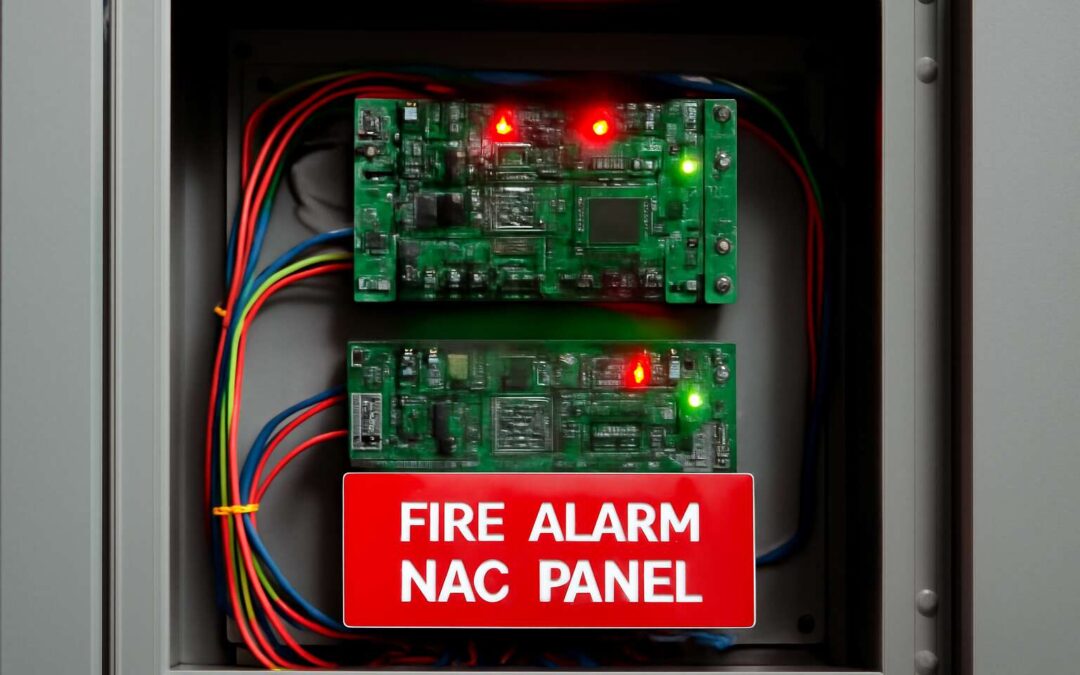
NAC panel fundamentals for modern fire alarm systems
What is a NAC panel and its role in fire safety
In the seconds between ignition and evacuation, the fire alarm nac panel becomes the heartbeat of safety. It doesn’t shout; it coordinates signals, tests circuits, and keeps building occupants aware as smoke drifts through corridors. This core module anchors modern fire safety in any South African building.
From detectors to notification devices, the NAC panel translates fragile sensor whispers into decisive action. It controls audible alarms, visual strobes, elevator recall, and damper releases, while staying vigilant against faults. In short, the fire alarm nac panel is the nerve center of your life-saving communications.
Key roles of a NAC panel include:
- Central monitoring and alarm signaling
- Power management and battery backup
- Zone control and fault tolerance
- Integration with building management systems
In South Africa’s evolving skylines, reliability matters more than ever. The NAC panel you choose should feel sturdy, responsive, and ready to support your fire safety ecosystem.
Key components and terminology
The fire alarm nac panel is the quiet conductor of safety, orchestrating detectors and alarms without shouting. In South Africa’s evolving skylines, it channels power, tests circuits, and keeps occupants informed as smoke drifts through corridors. A well-tuned panel turns sensor whispers into decisive action and becomes the heartbeat of a building’s life-saving communications. That is safety in motion!
Key components that keep this orchestra in tune include:
- Central power supply and battery backup
- Notification appliance circuit (NAC) wiring and fault monitoring
- End-of-line supervision for reliable fault detection
- Interface to building management systems and security platforms
Together, these elements define the fire alarm nac panel’s reliability and readiness, translating local safety standards into immediate responses.
NAC, EOLR, zone control, and fault tolerance form the lexicon for translating safety into action. Understanding the fire alarm nac panel language helps teams tailor systems across South Africa’s buildings.
Standards and compliance basics
Every second counts in the smoke-streaked corridors; the fire alarm nac panel stands as the quiet clock, counting down to safe exits. In South Africa, standards and compliance anchor its reliability, guiding power resilience, testing routines, and fault monitoring to protect occupants.
- Adherence to SANS standards and local fire regulations for panels, wiring, and end-of-line supervision.
- Thorough commissioning, documented testing, and ongoing maintenance records.
- Clear interfaces with building management systems and security platforms to ensure timely alerts and coordinated responses.
With these guardrails, the fire alarm nac panel becomes a precise conduit for life-saving communication, translating sensor whispers into decisive action while keeping corridors calm under pressure.
Architecture and hardware of notification appliance control panels
Control modules and backplanes
The NAC is the building’s safety nervous system. A single misstep in its architecture can delay evacuation; the fire alarm nac panel centralizes detection signals, annunciation, and power management. Its hardware layout—where modules sit on the backplane and how they interconnect—defines reliability when every second counts.
Control modules and backplanes are the core hardware of modern fire alarm systems. Common elements include:
- Power supply modules
- I/O and input boards
- Relay and annunciator modules
- Communication backplanes
In South Africa, a modular NAC architecture helps installers meet local safety expectations while enabling straightforward upgrades. This approach supports fault tracing, scalable expansion, and reliable operation across zones and devices, with the hub tying detection, signaling, and control into one dependable system.
Power supply design and battery backup
In South Africa’s safety landscape, the fire alarm nac panel is the quiet maestro of evacuation, coordinating signals, power, and control. A clean architecture can shave seconds from response times and keep halls clear.
At its core, architecture and hardware center on power supply modules, IO boards, relay/annunciator units, and a sturdy backplane.
Core hardware facets include:
- Hot-swappable power modules for uptime
- Battery backup with health monitoring
- Redundant backplanes to avoid single points
- Integrated signaling interfaces for dependable notification
Power design and battery backup must withstand outages and climate swings, delivering reliable performance when every second counts.
Wiring, zoning, and addressing strategies
Every second counts when a fire erupts, and the architecture behind a fire alarm nac panel determines how swiftly people evacuate. A robust wiring harness, a rugged backplane, and modular IO boards form the circulatory system of the building’s safety. In practice, a clean layout reduces cross-talk, simplifies maintenance, and keeps control signals aligned with alarms, strobes, and voice announcements!
- Wiring topology that minimizes impedance and tamper-proof connections
- Zoning strategies that assign devices to logical areas for targeted notification
- Addressing schemes that map devices to a clear, scalable bank for fast diagnostics
South Africa’s diverse environments—from high-rise offices to shopping precincts—benefit from consistent standards and local adaptation. A NAC panel that embraces precise wiring, clear zoning, and scalable addressing makes maintenance simpler and response times swifter for the people who depend on it.
Communication interfaces and protocols
Architecture is the quiet hero of every fire alarm nac panel. In the built environment where every heartbeat of a system matters, the hardware spine—rugged backplane, modular IO boards, and a dependable power rail—keeps alarms in perfect cadence with strobes and voice evac. When the ducts hiss and the lights flicker, a well-designed panel preserves clarity and calm, shaving milliseconds that save lives. I’ve seen these systems turn chaos into coherence in moments.
Communication interfaces and protocols translate intent into action. Ethernet and RS-485 tie panels into campus networks; BACnet/IP and Modbus RTU strike a balance between speed and compatibility; simple, humble serial links remain relevant for legacy devices.
- Ethernet/IP networking
- BACnet/IP or Modbus RTU
- RS-485 serial links
- Event-driven notification protocols
Africa’s cities demand resilient hardware that conquers dust, heat, and load shedding—local standards meet global practice in South Africa’s buildings, ensuring serviceability and consistent performance.
Environmental and EMI considerations
In South Africa’s concrete canyons, a reliable NAC panel isn’t a showpiece—it’s a lifeline. I’ve watched it translate smoky quiet into ordered evacuation in a heartbeat.
Architecture and hardware of notification appliance control panels form the system’s spine: a rugged backplane, modular IO boards, and a dependable power rail keep alarms in cadence with strobes and voice evacuation. The enclosure breathes through careful heat management and vibration resistance; modularity means field upgrades without downtime. That is the fire alarm nac panel at its best.
Environmental and EMI considerations: Africa’s cities demand hardware that conquers dust and heat. Conformal coating, EMI shielding, and sealed connectors protect delicate circuits; IP-rated enclosures, filtered intakes, and robust power supplies ride out load shedding.
- Dust- and humidity-resistant enclosure
- Conformal coating on boards
- Sealed, vibration-friendly connectors
Installation, configuration, and testing workflows
Site assessment and mounting considerations
Across South Africa’s spaces, a well-tuned fire alarm nac panel can cut false alarms—audits report meaningful gains. Installation is more than box-mounting; it demands site assessment, solid mounting, and reliable power with battery backup. Accessibility for maintenance and clean cable routing keep systems discreet.
Configuration and testing workflows involve aligning zones and annunciators with building operations, verifying interfaces, and logging results so supervisors rest easy. The process validates fault conditions, supervisory signals, and redundant paths, all while preserving clear change records in a professional environment.
Site assessment and mounting considerations matter as much as the electronics. Review ceiling space, cable containment, and mounting heights that suit maintenance crews; choose a rugged enclosure that withstands heat and dust. In South Africa, local standards ensure it sits securely.
System configuration steps and best practices
Fire safety is the invisible productivity booster that keeps your team calm in a crisis. In South Africa’s bustling spaces, a well-tuned fire alarm nac panel cuts false alarms and speeds legitimate alerts, turning chaos into coordinated action.
Installation is strategic, not cosmetic. Begin with a robust enclosure for the fire alarm nac panel, clean cable routing, and reliable power with battery backup. Easy maintenance access keeps systems discreet while ensuring audits stay friendly and incidents stay minimal.
- Confirm interfaces with building management and fire service links
- Configure zones, annunciators, and naming conventions on the panel
- Set power priorities, battery backup, and fault tolerance
- Log every change for traceability and audits
Testing then follows: verify fault conditions, supervisory signals, and annunciation paths; check interfaces with other systems; and keep a tidy change record so supervisors sleep at night.
Testing procedures, verification, and acceptance criteria
In emergencies, preparation is non-negotiable. An installation that lasts is strategic, not cosmetic—secure mounting, clean cable routing, and power resilience that keeps systems alive when alarms ring. The safety backbone stays quiet while crises unfold.
Configuration follows with clarity and discipline. Confirm interfaces with building management and fire services, then carve the space into zones and annunciators with consistent naming. On a fire alarm nac panel, set power priorities and fault tolerance; log every change for traceability.
- Fault conditions are simulated to verify system behavior
- Supervisory signals are checked for reliability
- Annunciation paths and interfaces with other systems are validated
- Acceptance criteria are confirmed against the plan and audit requirements
Ultimately, the fire alarm nac panel is the heartbeat of response—quiet, decisive, and auditable.
Commissioning and handover workflows
Installation is the quiet choreography of a building’s safety life. I ensure secure mounting, clean cable routing, and power resilience that keeps systems alive as alarms ring. The fire alarm nac panel becomes the stage for calm in crisis.
Configuration and testing workflows flow with discipline:
- zone and annunciator mapping with consistent naming
- interface verification with building management and fire services
- change logging for traceability
Commissioning and handover workflows transform plan into practice. Witnessed tests, training sessions, and a clear maintenance dossier ensure the client sleeps soundly, knowing roles, responsibilities, and response times are documented.
From the last signature to ongoing care, the true security of a South African building rests on the quiet promise kept by a well-executed handover.
Automation features, integration, and maintenance
Advanced signaling patterns and notification behavior
Automation features in a fire alarm nac panel streamline response and reduce human error. It coordinates detectors, alarms, and external shutdowns with self-checks, health monitoring, and adaptive zoning that reacts to each incident. The result is faster containment and clearer, auditable actions!
Integration with building management systems, security platforms, and remote monitoring expands a NAC panel’s reach in South Africa. IP connectivity, open protocols, and cloud dashboards enable centralized oversight, faster fault isolation, and data-driven maintenance planning without swapping hardware.
Advanced signaling patterns and notification behavior ensure messages reach the right people, at the right time, and through the right channels. Multi-level alerts, silencing rules, and escalation paths mix audible alarms with visual strobes and voice messages to match the scenario, especially during maintenance windows.
- Remote diagnostics
- Firmware updates
- Health checks
- Audit trails
Integrations with building management systems and third parties
Automation slashes response times and trims human error in the heat of the moment. A modern fire alarm nac panel acts as the orchestra pit of a building’s life-safety system, coordinating detectors, alarms, and external shutdowns with real-time health checks and adaptive zoning. In South Africa’s fast-paced environments, this level of orchestration isn’t a luxury—it’s a lifeline.
Integration with Building Management Systems and trusted third parties broadens its reach. IP connectivity and open protocols feed centralized dashboards, enabling faster fault isolation and proactive maintenance. A compact maintenance suite keeps the system in tune:
- Remote diagnostics and fault isolation
- Over-the-air firmware updates for minimal downtime
- Audit trails and health checks for compliance
Maintenance becomes a collaborative, cloud-powered effort that keeps systems ready without the surprise downtime traditional upgrades demand.
Diagnostics, fault codes, and troubleshooting tips
The fire alarm nac panel is a building’s heartbeat in motion—an unseen conductor that orchestrates detectors, alarms, and external shutdowns with real-time health checks. In South Africa’s busy commercial spaces, clients report up to 40% faster response times when automation coordinates life-safety signals, turning chaos into quiet, predictable action.
Automation features expand its reach through seamless integration with Building Management Systems and trusted third parties. IP connectivity powers centralized dashboards, while cloud maintenance brings remote diagnostics and OTA updates, keeping the system in tune without the downtime of traditional servicing.
- Clear fault codes and prioritized alerts that translate complex signals into actionable insight
- Secure over-the-air firmware updates with minimal disruption
- Comprehensive health audits and audit trails for compliance and trend analysis
Diagnostics, fault codes, and troubleshooting stay approachable for engineers and operators, turning potential alarms into informed decisions that safeguard property and people.
Maintenance and lifecycle management
Across South Africa’s bustling commercial spaces, the fire alarm nac panel is not just hardware—it’s the heartbeat that keeps detectors, alarms and shutdowns in quiet, choreographed harmony. In real-world trials, automation coordination delivered up to 40% faster response times, turning potential chaos into predictable safety.
Automation features push the panel beyond a stand-alone unit, weaving life-safety signals into your digital ecosystem. The crown jewels include:
- Seamless Building Management System (BMS) integration
- Secure over-the-air firmware updates with minimal downtime
- Centralized dashboards and cloud diagnostics for remote visibility
Maintenance and lifecycle management keep the system lean and reliable: remote diagnostics, proactive health audits, and scheduled component refreshes with auditable trails for compliance. A cloud-first approach spots aging parts before trouble erupts, reducing downtime and extending useful life.
