
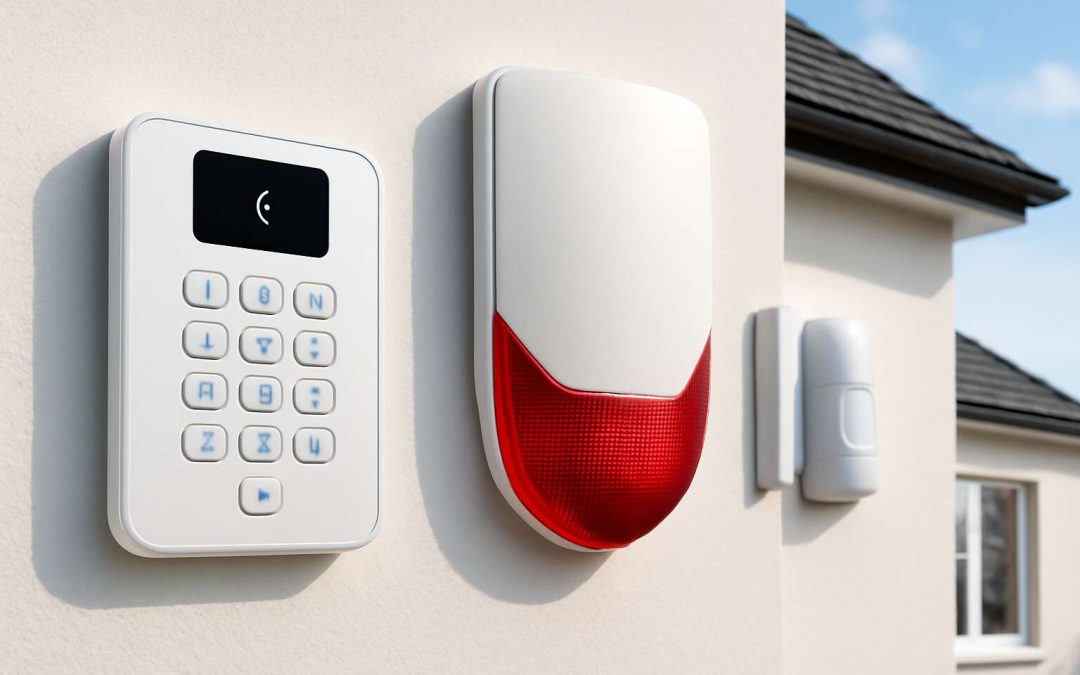
Types of Security Alarms Based on Technology.
Wired Security Alarms – Detailed overview of wired systems, their advantages, and ideal use cases.
In an era where security is paramount, understanding the myriad options available is crucial. Among the various types of security alarm systems, wired security alarms stand out for their reliability and robustness. These systems have been the backbone of many security setups for decades, offering a steadfast line of defence for both residential and commercial properties. Their durability and consistent power supply make them a preferred choice for those asking, “how many type of security alarm” can meet different security needs.
Wired security alarms operate through a network of physical cables connecting sensors to a central control panel. This design minimises false alarms and ensures rapid response times, a vital feature in critical situations. One of the key advantages of wired systems is their resilience against hacking, providing a layer of security that wireless systems might lack. They are ideal for environments where stability and high security are non-negotiable, such as banks, museums, or high-value homes.
While installation can be more invasive and costly, the longevity and dependable performance of wired security alarms often justify the investment. For those contemplating how many type of security alarm, wired systems remain a compelling choice, especially when customised security solutions are required. Their straightforward architecture also simplifies troubleshooting, making maintenance less cumbersome over time.
Wireless Security Alarms – Exploration of wireless systems, benefits, and installation considerations.
In an increasingly connected world, wireless security alarms have gained widespread popularity, transforming the way we protect homes and businesses. Unlike their wired counterparts, these systems rely on radio signals to communicate between sensors and the central control panel, eliminating the need for invasive cabling. This flexibility makes them particularly appealing to those wondering how many type of security alarm they can choose from, especially when considering ease of installation and scalability.
Wireless alarms offer several benefits that resonate deeply with modern security needs. They are quick to install, often taking a fraction of the time compared to wired systems, and can easily be expanded as your security requirements evolve. For rural homes or properties where wiring is impractical, wireless systems provide a seamless solution. However, it’s essential to weigh their susceptibility to interference and hacking, which calls for robust encryption and regular updates.
When exploring the question of how many type of security alarm exist, wireless systems often come with a variety of features. These include motion detectors, door/window sensors, and even smart integrations that allow remote monitoring via smartphones. Here’s a quick overview:
- Wireless Intruder Alarms
- Wireless Smoke and Fire Alarms
- Wireless CCTV and Video Monitoring Systems
In essence, wireless security alarms represent a versatile and user-friendly option that complements traditional security measures. Their unobtrusive nature and adaptability make them a vital part of the broader conversation about how many type of security alarm are available to safeguard what matters most.
Hybrid Security Alarms – Combination of wired and wireless components for flexible security solutions.
The landscape of security alarms is far more intricate than a simple choice between wired and wireless systems. Hybrid security alarms stand as a testament to this complexity, blending the strengths of both worlds into a seamless, adaptable solution. They are particularly appealing in scenarios where flexibility is paramount, such as in historic buildings or property extensions that challenge conventional wiring methods.
By integrating wired and wireless components, hybrid systems offer an elegant compromise—ensuring reliability through wired connections while maintaining the convenience and scalability of wireless technology. This versatility is crucial for those pondering how many type of security alarm options truly exist, as it widens the horizon beyond binary choices.
- Wired sensors provide stability and resistance to interference, making them ideal for fixed, high-security zones.
- Wireless modules facilitate rapid deployment and easy expansion, perfect for temporary setups or evolving security needs.
Adopting a hybrid approach empowers property owners to craft customised security ecosystems that are both resilient and adaptable, reflecting the realisation that the question of how many type of security alarm there are is inherently layered. Such systems embody the philosophical truth that security must evolve with us, integrating tradition with innovation for a truly bespoke safeguard.
Types of Security Alarms by Detection Method.
Door and Window Sensors – How contact sensors work to detect breaches.
In the labyrinth of modern security measures, the question of how many types of security alarm exist often feels like peeling back layers of an intricate puzzle. Among these, one particularly vital category hinges on detection methods—specifically, door and window sensors that serve as vigilant gatekeepers, constantly attuned to breaches. These contact sensors operate on a simple yet profoundly effective principle: they detect when a door or window is opened or tampered with, triggering an alert that halts intruders in their tracks. Their silent, persistent watchfulness embodies the essence of intrusion detection, providing a tangible sense of security that’s both immediate and unobtrusive.
Door and window sensors work by using a magnetic contact system. When the door or window is closed, the magnet aligns with the sensor, completing a circuit. Once separated—say, when someone tries to force entry—the circuit breaks, activating the alarm. This straightforward mechanism masks a sophisticated understanding of human behaviour—anticipating the subtle moments of vulnerability and turning them into opportunities for swift response. These sensors are often integrated into a broader security ecosystem, seamlessly connecting with motion detectors, alarms, and even smart home systems, creating an intricate web of protection that answers the question of how many type of security alarm are truly necessary.
Motion Detectors – Types of motion detection technologies and their application.
In a world where security threats constantly evolve, understanding how many type of security alarm are available can seem overwhelming. Motion detectors stand out as versatile tools, capable of covering vast areas with a variety of detection technologies. These devices are not one-size-fits-all; they come in different forms, each suited to specific environments and security needs.
Passive Infrared (PIR) sensors are among the most common, detecting heat signatures emitted by intruders. Microwave sensors, on the other hand, emit signals that bounce off objects, revealing movement through changes in the reflected waves. Ultrasonic detectors use sound waves to sense motion, making them particularly effective in enclosed spaces where other sensors might struggle.
Some highly sophisticated systems even combine multiple detection methods—these hybrid solutions enhance accuracy and reduce false alarms. Whether used in residential or commercial settings, understanding how many type of security alarm exist helps in crafting a tailored security strategy. Motion detection technologies are a cornerstone, offering a dynamic layer of protection that complements contact sensors and other security components.
Glass Break Sensors – Sensors designed to identify broken glass sounds.
In a realm where shadows dance and whispers of intrusion lurk, understanding the diverse tapestry of security alarms becomes essential. Among these, glass break sensors emerge as silent guardians, attuned to the unmistakable crack of shattered glass. These sensors are crafted to detect the specific sound frequencies produced when glass fractures, offering a swift alert to break-ins through windows or display cases.
Unlike motion detectors or contact sensors, glass break sensors respond solely to sound, making them ideal for environments where visual intrusion detection is insufficient. They can be installed discreetly, blending into the surroundings, yet standing guard against silent entry tactics. For those pondering how many type of security alarm exist, glass break sensors form a vital part of the arsenal—an auditory sentinel in the symphony of modern security systems.
Environment-based Detectors – Smoke, carbon monoxide, and temperature sensors integrated with security systems.
In the shadowed corridors of security, where unseen threats lurk in the silence, the realm of environment-based detectors stands as an essential bastion. These sensors—smoke, carbon monoxide, and temperature detectors—are woven into modern security systems like silent sentinels, vigilant against unseen dangers that threaten both life and property. Unlike the more overt alarms, these devices operate quietly in the background, alerting inhabitants before catastrophe strikes.
They serve a crucial role in answering the question of how many type of security alarm exist, especially in the context of environmental hazards. Their sensitivity to changes in air quality or temperature makes them irreplaceable in safeguarding households and commercial spaces alike. For example, smoke detectors act swiftly, raising alarms at the faintest whiff of danger, while carbon monoxide sensors silently monitor the invisible toxin that could claim lives in the dead of night.
In the grand tapestry of security solutions, environment-based detectors are often overlooked, yet they are the unseen guardians—ever watchful, ever silent—adding a layer of protection that is as essential as it is discreet.
Types of Security Alarms Based on Alarm Activation Method.
Audible Security Alarms – Sound-based alarms to alert occupants and neighbors.
In the realm of safeguarding your sanctuary, the question of how many types of security alarm exist is as vital as the locks on your door. Among these, audible security alarms stand out as the guardians that vocalise intrusion with a piercing cry, alerting both occupants and neighbours to potential peril. These sound-based alarms serve as a sonic barrier, a symphony of warning that refuses to be ignored. Their shrill alert can disorient intruders while simultaneously rallying help from nearby witnesses.
Audible security alarms are particularly effective in densely populated areas where silence might be mistaken for a non-issue. The roar of these alarms can often be the decisive factor in deterring a break-in before it even begins. While they are just one of many types of security alarm, their role as the first line of defence remains undeniable in the intricate tapestry of home security solutions.
Silent Security Alarms – Alarm systems that notify authorities quietly without alerting intruders.
In the intricate dance of home security, understanding how many type of security alarm exist is essential for crafting a comprehensive safety strategy. Among these, silent security alarms stand out as discreet guardians, alerting authorities without disturbing the peace of your home or giving intruders a hint. Unlike audible alarms that shout their presence, silent systems operate quietly in the background, ensuring help is dispatched swiftly and covertly.
This type of security alarm is particularly valued in high-stakes environments where discretion is paramount. For example, in neighbourhoods with close-knit communities, a silent alarm can prevent an intruder from escaping, knowing that help is already on the way. Their subtlety makes them an indispensable component of modern security solutions, complementing other systems to form an unbreakable shield around your sanctuary.
When considering how many type of security alarm there are, silent alarms often blend seamlessly with advanced security setups, offering peace of mind without the noise that might alert a potential thief. Their unobtrusive nature is a testament to the evolving landscape of home security, where innovation meets the need for calm reassurance.
Smart Security Alarms and Integration Options.
Wi-Fi Enabled Alarms – Benefits of home Wi-Fi connected alarms for remote access.
In today’s interconnected world, the advent of Wi-Fi enabled alarms has revolutionised home security. These smart security alarms offer unparalleled convenience by allowing homeowners to monitor their property remotely, whether they’re at work or on holiday. Imagine receiving instant alerts on your smartphone whenever a sensor is triggered—peace of mind no longer has to be a distant dream.
One of the key benefits of Wi-Fi connected alarms is their integration capability. They often work seamlessly with other smart home devices, creating a cohesive security ecosystem. For those wondering how many types of security alarm exist, Wi-Fi alarms stand out for their user-friendly interface and flexibility. They can be customised to include features such as video surveillance, environmental monitoring, and automatic alerts, making them an essential component of modern security systems.
- Remote access via smartphone or tablet
- Real-time alerts and notifications
- Easy integration with existing smart home devices
- Flexible installation options, often without the need for extensive wiring
Smart Home Compatibility – Compatibility with smart home devices like Alexa, Google Home, and control apps.
In the grand theatre of home security, the curtain has risen on a new act — one where technology and convenience dance in perfect harmony. Among the many scenes, the emergence of smart security alarms has captivated homeowners seeking both peace of mind and seamless integration. When pondering “how many type of security alarm” exist, the answer reveals a rich tapestry of options, each tailored to specific needs and environments.
Smart security alarms, renowned for their integration options, elevate home protection from mere detection to an intelligent dialogue between devices. Compatibility with smart home ecosystems—like Alexa, Google Home, and dedicated control apps—transforms these alarms into a central command hub. Imagine whispering commands or setting routines that activate lights, lock doors, and arm the alarm system—all with a simple voice or tap. This harmony of devices not only enhances security but also simplifies daily living, creating a symphony of interconnected safety.
To truly grasp the spectrum, consider the versatile integration options available. Many systems boast compatibility with a variety of smart home devices, allowing homeowners to craft personalised security ecosystems. Whether activating motion sensors upon sunset or receiving instant notifications when a sensor is triggered, these systems are the epitome of modern convenience. The question of “how many type of security alarm” often prompts the realisation that, in the realm of smart security, versatility is key—each system moulded to fit unique lifestyles and technological landscapes.
App-controlled Security Alarms – Features and advantages of remote management through mobile apps.
In the ever-evolving landscape of home security, the advent of app-controlled security alarms has revolutionised how we safeguard our sanctuaries. These intelligent systems, governed by the palm of your hand, offer a seamless blend of convenience and control. With a few taps, you can arm or disarm your alarm, monitor activity, or receive instant alerts—transforming your smartphone into a digital fortress. The beauty lies in their versatility; no longer confined to static installations, they adapt to your lifestyle, offering peace of mind wherever you are.
One of the most compelling features of these alarms is their ability to integrate with other smart devices. Imagine setting routines that activate your alarm system simultaneously with your smart lights or door locks—creating a harmonious ecosystem of safety. The question of how many type of security alarm exists becomes almost poetic when considering the diversity of options available. This realm ranges from simple remote management solutions to complex, multi-layered security networks that can be customised to fit any home or office environment.
Specialized Security Alarms for Commercial Use.
Industrial Security Alarms – High-security solutions for industrial facilities.
In the realm of commercial security, the stakes are higher than ever. Industrial facilities, in particular, demand specialised protection that goes beyond basic systems. High-security industrial security alarms are engineered for resilience, capable of withstanding attempted breaches and sophisticated intrusions. These alarms often incorporate multiple layers of technology, including vibration sensors, thermal imaging, and advanced access control, creating a fortress-like barrier against threats. Understanding how many type of security alarm exist is critical for businesses aiming to tailor their security strategy effectively.
For large-scale industrial sites, integrating specialised security alarms can be a game-changer. These systems are designed to detect intrusions early, alert security personnel immediately, and withstand environmental challenges such as extreme temperatures or electromagnetic interference. Whether it’s a chemical plant, manufacturing hub, or storage facility, choosing the right high-security solution can make all the difference in safeguarding assets and personnel. The question of how many type of security alarm are out there reveals a complex landscape, where each option offers unique advantages suited to specific security needs.
Access Control Alarms – Alarms integrated with access control systems.
When it comes to securing a commercial enterprise, knowing how many type of security alarm exist isn’t just a matter of curiosity — it’s the difference between a fortress and an open house for intruders. Specialized security alarms, particularly access control alarms, are the unsung heroes of modern security architecture. These systems seamlessly blend alarm technology with access management, creating a digital gatekeeper that’s as sophisticated as it is secure.
Access control alarms aren’t just about locking doors; they’re about controlling who comes in, when, and under what circumstances. From biometric scanners to card readers, these alarms can be programmed to raise an alert the moment an unauthorised attempt occurs. And for businesses questioning how many type of security alarm are out there, access control systems represent a crucial subset that elevates security from simple deterrence to active threat management.
In essence, understanding the spectrum of security alarm types — including access control alarms — enables businesses to craft tailored security strategies. Whether protecting sensitive data, valuable inventory, or personnel, the right alarm system can turn a security vulnerability into an impenetrable barrier. After all, knowing how many type of security alarm exist isn’t just academic; it’s a vital piece of the security puzzle that no organisation can afford to overlook.
Perimeter Security Systems – Fence sensors and ground-based alarms for site perimeter protection.
Perimeter security is the frontline defence for any commercial establishment. It’s the invisible barrier that deters intruders before they even reach the building. Fence sensors and ground-based alarms are integral to this protection, providing real-time alerts when someone attempts to breach the boundary. These specialised security alarms are designed to respond immediately, giving security teams a crucial head start in preventing theft or vandalism.
Understanding how many type of security alarm exist is essential for constructing a robust security ecosystem. Perimeter security systems, for instance, operate silently yet effectively, with some employing advanced technologies like vibration sensors or infrared detection. These alarms can be tailored to specific site needs, whether that’s a sprawling industrial complex or a smaller commercial property. Such versatility ensures that perimeter security remains a vital piece of the overall security puzzle, acting as the first line of defence against unauthorised access.
Emerging Types of Security Alarms and Future Trends.
AI-Powered Security Alarms – Use of artificial intelligence for predictive security.
As technology continues to evolve at an astonishing pace, the landscape of security alarms is transforming into something more intelligent and intuitive. AI-powered security alarms are now at the forefront, harnessing artificial intelligence to anticipate threats before they materialise. These systems learn from behavioural patterns, enabling them to predict potential intrusions and alert homeowners or security personnel proactively. This shift from reactive to predictive security raises a compelling question: how many types of security alarm can truly adapt to our modern needs?
Future trends suggest a convergence of AI with other emerging technologies, such as machine learning and big data analytics, creating a new breed of security systems. These innovations promise not only heightened responsiveness but also a more nuanced understanding of human activity within monitored spaces. As the boundaries of traditional alarm systems expand, it becomes clear that the answer to how many type of security alarm exists is no longer straightforward. The spectrum now encompasses systems that are not just sensors and sirens but intelligent guardians, constantly evolving to meet the complexities of our environment.
Integrated Security Ecosystems – Unified systems combining multiple alarm types for comprehensive protection.
As security technology strides into the future, the question of how many type of security alarm truly exist becomes increasingly complex. No longer confined to simple sensors or sirens, today’s security alarms are morphing into sophisticated, integrated ecosystems. These emerging systems are designed not just to alert but to anticipate, adapt, and respond with unprecedented intelligence. The evolution of security alarms reflects a broader societal shift towards proactive safety measures—moving from reactive responses to predictive guardianship.
One notable trend shaping the future of security is the development of integrated security ecosystems. These systems seamlessly combine multiple alarm types—such as motion detectors, environment-based sensors, and AI-powered alerts—into a unified platform. This holistic approach ensures comprehensive protection, where different alarm components communicate and coordinate their actions intelligently. For instance, a security system might automatically activate perimeter sensors when motion detectors detect unusual activity, creating a layered defence that is both nuanced and resilient.
Within this landscape, the real intrigue lies in the variety of alarm systems that can be integrated into these ecosystems. The spectrum now encompasses traditional wired and wireless alarms, hybrid systems, and even advanced AI-enabled solutions. Each contributes to a layered security framework, addressing specific vulnerabilities while enhancing overall safety. As a result, the question of how many type of security alarm exists is no longer straightforward but rather a reflection of an interconnected, ever-evolving security paradigm.
In the realm of future trends, the convergence of artificial intelligence, big data analytics, and smart home compatibility promises a new era of security systems. These innovations enable alarms to learn behavioural patterns, predict potential threats, and notify owners or authorities proactively. It’s a fascinating evolution—where security systems are becoming not just reactive tools but intelligent guardians that adapt to our modern needs. This ongoing transformation underscores a vital realisation: security is no longer static but a dynamic, interconnected ecosystem that continuously evolves to meet the complexities of our environment.
Biometric Security Alarms – Using biometric data for authentication and alarm activation.
Biometric security alarms are transforming the landscape of modern safety measures. By leveraging unique human identifiers such as fingerprints, facial recognition, or iris scans, these alarms offer a level of authentication that’s virtually impossible to duplicate. Imagine a security system that recognises your face as you approach, instantly activating the alarm if an unauthorised person attempts entry. This sophisticated technology exemplifies how many type of security alarm are evolving beyond traditional boundaries.
Future trends suggest that biometric alarms will become increasingly integrated with AI-powered ecosystems, enabling predictive security that adapts to behavioural patterns. For example, a biometric alarm linked to a smart home system could learn family routines, alerting homeowners or authorities if an anomaly occurs. As these systems become more intuitive, the question of how many type of security alarm exist shifts from a simple count to an expansive ecosystem of interconnected solutions.
Biometric alarms also enhance security in high-security environments, offering seamless access control combined with silent alerts for intrusion. This emerging alarm type exemplifies the broader shift towards intelligent, interconnected security solutions that anticipate threats before they materialise, creating safer spaces with a supernatural edge of certainty. The rapid advancement of biometric technology ensures that these alarms are not just reactive but proactive guardians of our most vital assets.
